Please wait ...
0% Complete
فارسی
Home
/
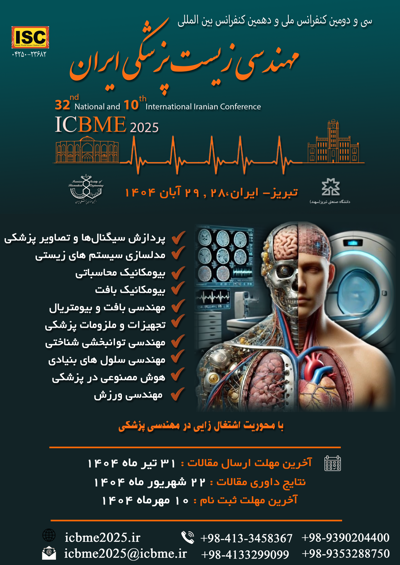
سی و دومین کنفرانس ملی و دهمین کنفرانس بین المللی مهندسی زیست پزشکی ایران
Comparative Evaluation of Deep Learning Architectures for Static American Sign Language Recognition
Authors :
Shamim Najafi
1
Sedigheh Dehghani
2
1- دانشگاه آزاد اسلامی واحد علوم و تحقیقات تهران
2- دانشگاه شهید بهشتی
Keywords :
Sign Language Recognition،Convolutional Neural Networks (CNN)،Long Short-Term Memory (LSTM)،Modified LeNet-5،Autoencoder Classifier Network (AEC)،Ensemble Strategies
Abstract :
Sign language is a vital form of non-verbal communication for individuals with hearing and speech impairments, yet its interpretation remains challenging. This study optimizes four deep learning models—Convolutional Neural Networks (CNN), Autoencoder Classifier Networks (AEC), modified LeNet-5, and Long Short-Term Memory (LSTM)—for static American Sign Language (ASL) recognition. Performance and generalization were enhanced using Batch Normalization, Dropout, Global Average Pooling, Learning Rate Scheduling, and alternative optimizers such as SGD and AdamW. Experimental results show that CNN-9 achieved the highest performance (99.05%), followed by AEC-7 (94.88%), LeNet-9 (91.03%), and LSTM (88.32%). These findings demonstrate the effectiveness of deep learning architectures for static ASL recognition and highlight the impact of architectural and training adjustments. Ensemble strategies further improved results: Soft Voting combining CNN-9 and AEC-7 achieved the best outcome, Weighted Soft Voting ensembles excluding LSTM-1 performed best, and Hard Voting with CNN-9, AEC-7, and LSTM-1 outperformed other configurations. Overall, ensemble methods enhance accuracy and robustness beyond individual models.
Papers List
List of archived papers
مروری بر ابزارهای نوین تأمین مالی اسلامی
مهدی زینالی
تاثیر هوش مصنوعی بر اتوماسیون فرآیندهای حسابداری
سیدمحمد عالی نژاد - حسن هاتف - سیدجبار عالی نژاد
آلیاژهای حافظهدار نیکل-تیتانیم در مهندسی پزشکی: نوآوریها، چالشها و کاربردهای پزشکی
مهدیه سلطانعلی پور - میلاد بدر - جعفر خلیل علافی
ارائه الگوی حسابداری منابع انسانی در شرکتهای دانش بنیان با رویکرد داده بنیاد
حسین بوداقی خواجهءنوبر - فخرالدین محمدرضایی - بهارک یادگار جمشیدی
راهکارهای عملی برای اجرای موفق پروژههای هوش مصنوعی در ایران
ملینا عبدلی
شناسایی خودکار حملات روز صفر با رویکرد چندفازی در تولید امضاهای Snort
مازیار کریمی - سعید مهرجو
Structural Insights into the Molecular Mechanism of Cancer Regulator BRCA1 Methylation
Shadi Asadi - Maryam Azimzadeh Irani
نقش پیاده سازی هوش مصنوعی در تحول ارتباطات بازاریابی وتوسعه ی شایستگی اخلاقی برندهای فعال
شبنم سخی نیا
نقش بازاریابی رابطه مند و مدیریت ارتباط با مشتری درتقویت وفاداری مشتری باتاثیر هوش مصنوعی
فرزاد توکلی - معصومه خوانچه سپهر
تحلیل المان محدود تنشهای وارده به بافتهای نرم مفصل زانو در درجات مختلف فلکشن
سروش سیادت - هادی تقی زاده
more
Samin Hamayesh - Version 44.7.0