لطفا منتظر بمانید ...
0% Complete
English
☰
صفحه اصلی
کنفرانسهای فعال
مدیریت منابع انسانی پایدار
حسابداری
بازاریابی و برندینگ در عصر هوش مصنوعی
هوش مصنوعی:نوآوری، کسبوکار و آموزش
ارشیو کنفرانسها
اولین کنفرانس ملی هوش مصنوعی
دومین کنفرانس ملی هوش مصنوعی
اولین کنگره ملی حسابداری، مالی و مالیاتی
32کنفرانس بین المللی زیست پزشکی
راهنمای شرکت
نحوه ثبتنام
ثبت نام مدیریت منابع انسانی پایدار
ثبت نام دومین کنگره ملی حسابداری
ثبت نام سومین کنفرانس ملی هوش مصنوعی
ثیت نام بازاریابی و برندینگ در عصر هوش مصنوعی
ثبت نام زنجیره ارزش نفت گاز و پتروشیمی
ارسال مقاله
فرمت مقالات مدیریت منابع انسانی پایدار
فرمت مقالات سیستم های هوشمند حسابداری
فرمت مقالات ملی بازاریابی و برندینگ در عصر هوش مصنوعی
فرمت مقالات سومین کنفرانس هوش مصنوعی
سوالات متداول
اخبار و رویدادها
درباره ما
تماس با ما
صفحه اصلی
/
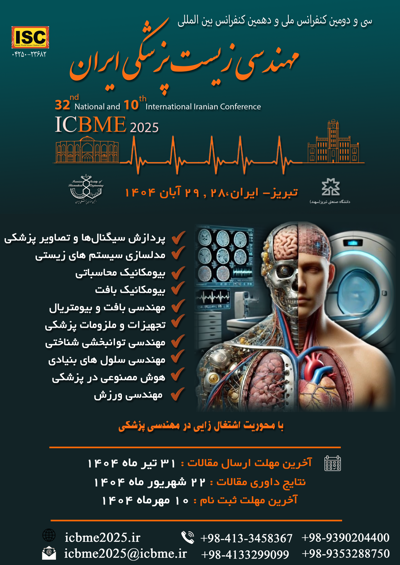
سی و دومین کنفرانس ملی و دهمین کنفرانس بین المللی مهندسی زیست پزشکی ایران
Unsupervised Gait Anomaly Detection Using Generative Adversarial Networks: A Feasibility Study
نویسندگان :
Seyed Hooman Hosseini-Zahraei
1
Ali Chaibakhsh
2
1- Intelligent Systems and Advanced Control Lab, Faculty of Mechanical Engineering, University of Guilan
2- Faculty of Mechanical Engineering, University of Guilan
کلمات کلیدی :
Gait Analysis،Gait Analysis،Generative Adversarial Networks (GAN)،Unsupervised Learning،Wearable Sensors،Feasibility Study
چکیده :
Anstract: The automated classification of human gait, a critical indicator of neuromuscular health, is often hindered by the dependency of supervised machine learning on extensive labeled pathological datasets, which are scarce and difficult to obtain. This paper explores the feasibility of a paradigm towards unsupervised learning, proposing a framework based on a Wasserstein Generative Adversarial Network with Gradient Penalty (WGAN-GP). The WGAN-GP is trained exclusively on healthy gait patterns from a single young subject's shank-mounted Inertial Measurement Unit (IMU) to build a model of healthy movement. The framework utilizes a reconstruction-based anomaly detection strategy, where abnormalities are quantified by the magnitude of error when attempting to reconstruct a new gait cycle from the learned healthy model. Evaluated using real-world data from healthy subjects (both young and old) and individuals with Parkinson's disease, the model demonstrated strong performance, achieving an Area Under the Curve (AUC) of 0.96. Notably, the framework also showed sensitivity to non-pathological, age-related gait variations. This feasibility study provides compelling evidence for the efficacy of WGAN-GP-based unsupervised detection as a data-efficient and generalizable alternative, paving the way for future validation on larger clinical datasets to characterize mobility impairments across various disorders and age groups.
لیست مقالات
لیست مقالات بایگانی شده
تاثیر اشتراک گذاری دانش در رسانه های اجتماعی بر توسعه کسب و کارهای کوچک و متوسط تولیدات نوآورانه
حسین الف نژاد - حسین بوداقی خواجه نوبر
Automated Kinematic Analysis of Barbell Curl Using Custom IMU and Deep Learning Techniques
Mohammad Khalfe Nilsaz - Elham Shirzad - Ali Fahim
Fast Reflection-Mode Ultrasound Computed Tomography Versus Conventional Pulse-Echo Technique
Elnaz Rostami Siahpoush - Haniye Fathi - Zahra Kavehvash
بررسی نقش حسابداری مدیریت در بهبود تصمیمگیری استراتژیک
علی اصغر نورمحمدی
تجزیه و تحلیل رفتار بیماران پارکینسون با استفاده از نیروسنج صفحه ای مبتنی بر هوش مصنوعی
شیدا ورزشی - روزبه عابدینی نسب - محمد نجفی آشتیانی - مهراد پوریوسف میاندوآب
ارائه الگوی استفاده از هوش مصنوعی در حسابرسی داخلی
مهناز ذابح غازانی
Data Mining in the Age of Information Explosion: An Intelligent Analysis Tool for Social Media
Hossein Bodaghi Khajeh Noubar - Seyed Meead Hosseini - Shiva Mohammadi
بهینهسازی ترافیک هوشمند با کنترل مرکزی و دادهکاوی
سجاد یوسفی - مریم پورنجف - بهارک نادعلی پور - فاطمه سلیمی
بررسی عملکرد سلولهای T در میکرومحیط تومور HGSOC با رویکرد توالییابی تکسلولی
زهرا زندی - روزبه عابدینی نسب
The Impact of an Interactive Rehabilitation Protocol on Reorganization of Brain Networks in Children with Cerebral Palsy: A Pilot Study
Shahed Salehzehi - Mahdi Mollaei - Parisa Hosseini - Ali Koohian Mohammad abadi - Mohammad Ebrahim Hashemi - Hamid Reza Kobravi - Narges Hashemi - Mehran Beiraghi Toosi - Javad Akhondian
بیشتر
19 اردیبهشت 1405
راهنمای انتخاب کنفرانس معتبر برای چاپ مقاله علمی
19 اردیبهشت 1405
چرا شرکت در کنفرانسهای علمی برای مصاحبه دکتری اهمیت دارد؟
21 اردیبهشت 1405
پذیرش سریع مقاله در کنفرانسهای علمی مهندسی و فناوری آغاز شد
21 اردیبهشت 1405
آغاز ثبتنام در همایشهای بینالمللی مدیریت و حسابداری
ثمین همایش، سامانه مدیریت کنفرانس ها و جشنواره ها - نگارش 44.7.0