لطفا منتظر بمانید ...
0% Complete
English
☰
صفحه اصلی
کنفرانسهای فعال
مدیریت منابع انسانی پایدار
حسابداری
بازاریابی و برندینگ در عصر هوش مصنوعی
هوش مصنوعی:نوآوری، کسبوکار و آموزش
ارشیو کنفرانسها
اولین کنفرانس ملی هوش مصنوعی
دومین کنفرانس ملی هوش مصنوعی
اولین کنگره ملی حسابداری، مالی و مالیاتی
32کنفرانس بین المللی زیست پزشکی
راهنمای شرکت
نحوه ثبتنام
ثبت نام مدیریت منابع انسانی پایدار
ثبت نام دومین کنگره ملی حسابداری
ثبت نام سومین کنفرانس ملی هوش مصنوعی
ثیت نام بازاریابی و برندینگ در عصر هوش مصنوعی
ثبت نام زنجیره ارزش نفت گاز و پتروشیمی
ارسال مقاله
فرمت مقالات مدیریت منابع انسانی پایدار
فرمت مقالات سیستم های هوشمند حسابداری
فرمت مقالات ملی بازاریابی و برندینگ در عصر هوش مصنوعی
فرمت مقالات سومین کنفرانس هوش مصنوعی
سوالات متداول
اخبار و رویدادها
درباره ما
تماس با ما
صفحه اصلی
/
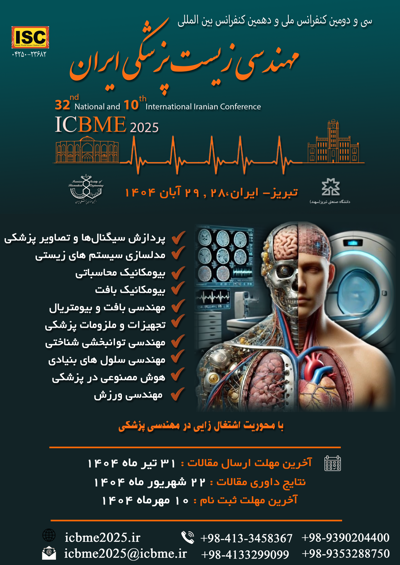
سی و دومین کنفرانس ملی و دهمین کنفرانس بین المللی مهندسی زیست پزشکی ایران
Biomechanical Evaluation and Comparison of Spinal Fixators in the Lumbar (L3–L4) Region Using the Finite Element Method
نویسندگان :
Nima Moazed
1
Mohammad Haghpanahi
2
1- دانشگاه علم و صنعت ایران
2- دانشگاه علم و صنعت ایران
کلمات کلیدی :
Biomechanical Analysis،Spinal Fixation،Lumbar Spine،Finite Element Method،Pedicle Screw and Rod
چکیده :
Treatment of fractures, deviations, and abnormalities of the spine requires precise and appropriate tools based on various concepts such as rigid stabilization systems, semi-rigid stabilization, and dynamic stabilization. In this study, the biomechanical evaluation of different stabilization systems in the lumbar region (L3-L4) was performed using finite element analysis. A healthy spine model without stabilization and three stabilized models with different rods were considered: a conventional simple rod (rigid stabilization), a curved rod (dynamic), and a notched rod. All spinal models were loaded with a compressive force of 400 Newtons and a moment of 10 Newton-meters in four movements: flexion, extension, lateral bending, and axial rotation. The results for range of motion (ROM), percentage reduction in range of motion, von Mises stress, and percentage reduction in von Mises stress were compared. Precision biomechanical tools for the spine are significantly sensitive to geometric features. The obtained results showed that all three rod models used resulted in the fusion of the lumbar vertebrae (L3-L4). However, considering that the stress and strain on the pedicle screw are critical factors in reducing complications and failures of the spinal stabilization system, the notched rod, due to its lower stress compared to other models, has the best performance.
لیست مقالات
لیست مقالات بایگانی شده
بررسی تاثیر ورشکستگی بر رابطه بین استراتژیهای تجاری و معیارهای عملکرد شرکت (ESG)
جواد پورغفار - ایوب یغمائی علیشاه
چارچوب سلسلهمراتبی مبتنی بر مدل انتشار شرطی و شبکه پیشبینیکننده برای تولید و بازشناسی توامان حالات چهره
علی محمدپزنده - عمادالدین فاطمیزاده
.Deep Learning-based Segmentation of Human Sperm Heads using YOLOv8 and SAM
Hadis Aligoo Zanjany - Maryam Pashaiasl - Ata Jodeiri
اصول سرمایه گذاری پایدار در شهرداری ها
بهرام مظفر
بررسی میزان آشنایی پزشکان با هوش مصنوعی
بهارک یادگار جمشیدی - آرزو صدری - یوسف صادقمند - علیرضا مجد خیابانی
Analyzing Blood Glucose Levels with Near Infra-Red Spectroscopy and Chemometric Multivariate Methods
Hadi Barati - Arian Mousavi Madani - Soheil Moradi - Mohammad Mohsen Ebrahimi Seyghalan - Mehdi Fardmanesh
کاربرد هوش مصنوعی در مدیریت پروژه در زمینههای زنجیره تأمین
فرشاد زارعی
ارتباط بین عملکرد پایداری و کارایی سرمایهگذاری با نقش تعدیلگری ارزش شرکت
مهدی زینالی - محمد کیانی - سونیا کیوان بد
EEG-based Schizophrenia Detection Using Spectral, Entropy, and Graph Connectivity Features with Machine Learning
Nazila Ahmadi Daryakenari - Seyed Kamaledin Setarehdan
راهبرد تجاری و رفتار نامتقارن هزینهها با تاکید بر نقش توانایی مدیریتی شواهدی از شرکتهای پذیرفته شده بورس اوراق بهادار تهران و مسقط
علی انصاری - مهدی بشکوه
بیشتر
19 اردیبهشت 1405
راهنمای انتخاب کنفرانس معتبر برای چاپ مقاله علمی
19 اردیبهشت 1405
چرا شرکت در کنفرانسهای علمی برای مصاحبه دکتری اهمیت دارد؟
21 اردیبهشت 1405
پذیرش سریع مقاله در کنفرانسهای علمی مهندسی و فناوری آغاز شد
21 اردیبهشت 1405
آغاز ثبتنام در همایشهای بینالمللی مدیریت و حسابداری
ثمین همایش، سامانه مدیریت کنفرانس ها و جشنواره ها - نگارش 44.7.0