لطفا منتظر بمانید ...
0% Complete
English
☰
صفحه اصلی
کنفرانسهای فعال
مدیریت منابع انسانی پایدار
حسابداری
بازاریابی و برندینگ در عصر هوش مصنوعی
هوش مصنوعی:نوآوری، کسبوکار و آموزش
ارشیو کنفرانسها
اولین کنفرانس ملی هوش مصنوعی
دومین کنفرانس ملی هوش مصنوعی
اولین کنگره ملی حسابداری، مالی و مالیاتی
32کنفرانس بین المللی زیست پزشکی
راهنمای شرکت
نحوه ثبتنام
ثبت نام مدیریت منابع انسانی پایدار
ثبت نام دومین کنگره ملی حسابداری
ثبت نام سومین کنفرانس ملی هوش مصنوعی
ثیت نام بازاریابی و برندینگ در عصر هوش مصنوعی
ثبت نام زنجیره ارزش نفت گاز و پتروشیمی
ارسال مقاله
فرمت مقالات مدیریت منابع انسانی پایدار
فرمت مقالات سیستم های هوشمند حسابداری
فرمت مقالات ملی بازاریابی و برندینگ در عصر هوش مصنوعی
فرمت مقالات سومین کنفرانس هوش مصنوعی
سوالات متداول
اخبار و رویدادها
درباره ما
تماس با ما
صفحه اصلی
/
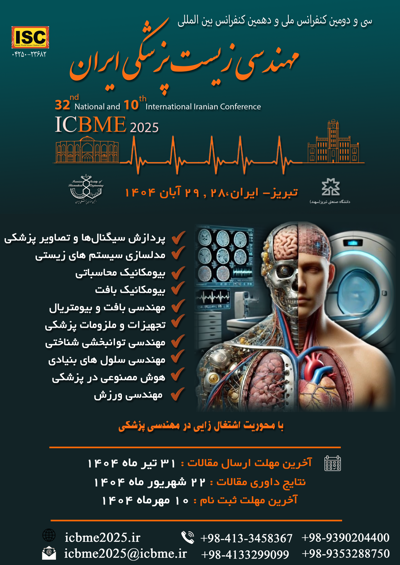
سی و دومین کنفرانس ملی و دهمین کنفرانس بین المللی مهندسی زیست پزشکی ایران
Effects of laminectomy on active-passive spine loads: a musculoskeletal finite element modeling investigation
نویسندگان :
Aida Ahmadi
1
Navid Arjmand
2
Parisa Azimi
3
1- Sharif University of Technology
2- Sharif University of Technology
3- Alborz University of Medical Sciences
کلمات کلیدی :
Lumbar spinal stenosis،Spinal surgery،Laminectomy،Finite element modeling،Spinal load distribution
چکیده :
Lumbar spine pain and disorders, including stenosis, are significant causes of disability, particularly among the elderly. often leading to surgical interventions such as laminectomy with or without facetectomy. It involves the removal of the lamina, spinous process, posterior ligaments, and, in some cases, facet joints, thereby disrupting the normal load-sharing among active and passive spine elements. In the absence of viable in vivo approaches, advanced computational modeling offers insights into the biomechanical mechanisms underlying postoperative complications. This study investigates the biomechanical effects of three surgical procedures, i.e., unilateral laminectomy, full laminectomy, and laminectomy with facetectomy, on active-passive spine load distributions using our validated musculoskeletal–finite element (MS–FE) model. The analysis focuses on preoperative (intact condition) and postoperative simulations of the L4–L5 motion segment during static upright standing posture and forward trunk flexion at 80° (deep flexion). Results show that in the upright standing, negligible differences were observed between intact and postoperative models since ligaments were not tensioned. In contrast, deep flexion induced substantial changes across surgical procedures. Total muscle force increased from 1730 N in the intact model to 1893 N, 2019 N, and 2019 N after unilateral laminectomy, full laminectomy, and laminectomy with facetectomy. Joint compression at L4–L5 increased from 1724 N to 1860 N, 2118 N, and 2118 N across the three procedures. Ligament forces decreased dramatically at L3–L4 and L4–L5 (e.g., 404 N to 12 N, and 399 N to 66 N, respectively) after full laminectomy and facetectomy. Surgical resection of posterior elements had the most pronounced effects on joint compression, ligament forces, and total muscle forces, particularly during deep flexion. Full laminectomy and facetectomy caused greater biomechanical alterations compared to unilateral laminectomy, which led to relatively smaller changes. Unilateral laminectomy should therefore be the preferred approach whenever sufficient decompression can be achieved, especially in cases with unilateral lateral recess stenosis, foraminal stenosis, or focal disc herniation without bilateral symptoms. Understanding these biomechanical changes is essential for optimizing surgical planning, minimizing anatomical disruption, and reducing the risk of postoperative complications.
لیست مقالات
لیست مقالات بایگانی شده
خطرات احتمالی در طراحی و تجزیه و تحلیل سیستمهای حسابداری و راهکارهای مقابله با آن
علی نمازیان - آرزو رضایی حومدینی
The Adaptive Approach of Ensemble Deep Learning Model in OCT Image Classification
Hamed Aghapanah Roudsari - Ali Ghaderian - Mrteza Choubin
Design and fabrication of a cost-effective dry electrode for electroencephalography (EEG) signal acquisition
Sobhan Sheykhivand - Nastaran Khaleghi - Lida Zareh Lahijan
The role of artificial intelligence in linking data-driven human resources with sustainable business branding
Baharak Yadegar Jamshidi - Hossein Bodaghi Khajeh Noubar
هوش مصنوعی و توسعه مهارت های آموزشی در دانشگاهها و مؤسسات آموزش عالی
فاطمه خسروپرویز
بهبود عملکرد سیستمهای شناسایی بدافزار با تلفیق شبکههای عصبی کانولوشن و الگوریتم جنگل تصادفی
بهزاد شاه پسندی - مجید مزینانی
Effects of laminectomy on active-passive spine loads: a musculoskeletal finite element modeling investigation
Aida Ahmadi - Navid Arjmand - Parisa Azimi
بررسی جامع تاثیر فناوریهای نوین بر حسابداری
میروحید پورربی - علی اصغر اکبری
تأثیرات و اخلاقیات استفاده از هوش مصنوعی: شواهدی از هند
رعنا شهدآور - ثریا قربانپور کولانی جدید - فاطمه حضرتی پور
Implementation of advanced machine learning on synthetic data for estimation of SOH and degradation of lithium ion batteries.
Abolfazl Moghaddam - Shadi Habibi - Behnam Ghalami Choobar
بیشتر
19 اردیبهشت 1405
راهنمای انتخاب کنفرانس معتبر برای چاپ مقاله علمی
19 اردیبهشت 1405
چرا شرکت در کنفرانسهای علمی برای مصاحبه دکتری اهمیت دارد؟
21 اردیبهشت 1405
پذیرش سریع مقاله در کنفرانسهای علمی مهندسی و فناوری آغاز شد
21 اردیبهشت 1405
آغاز ثبتنام در همایشهای بینالمللی مدیریت و حسابداری
ثمین همایش، سامانه مدیریت کنفرانس ها و جشنواره ها - نگارش 44.7.0