لطفا منتظر بمانید ...
0% Complete
English
☰
صفحه اصلی
کنفرانسهای فعال
مدیریت منابع انسانی پایدار
حسابداری
بازاریابی و برندینگ در عصر هوش مصنوعی
هوش مصنوعی:نوآوری، کسبوکار و آموزش
ارشیو کنفرانسها
اولین کنفرانس ملی هوش مصنوعی
دومین کنفرانس ملی هوش مصنوعی
اولین کنگره ملی حسابداری، مالی و مالیاتی
32کنفرانس بین المللی زیست پزشکی
راهنمای شرکت
نحوه ثبتنام
ثبت نام مدیریت منابع انسانی پایدار
ثبت نام دومین کنگره ملی حسابداری
ثبت نام سومین کنفرانس ملی هوش مصنوعی
ثیت نام بازاریابی و برندینگ در عصر هوش مصنوعی
ثبت نام زنجیره ارزش نفت گاز و پتروشیمی
ارسال مقاله
فرمت مقالات مدیریت منابع انسانی پایدار
فرمت مقالات سیستم های هوشمند حسابداری
فرمت مقالات ملی بازاریابی و برندینگ در عصر هوش مصنوعی
فرمت مقالات سومین کنفرانس هوش مصنوعی
سوالات متداول
اخبار و رویدادها
درباره ما
تماس با ما
صفحه اصلی
/
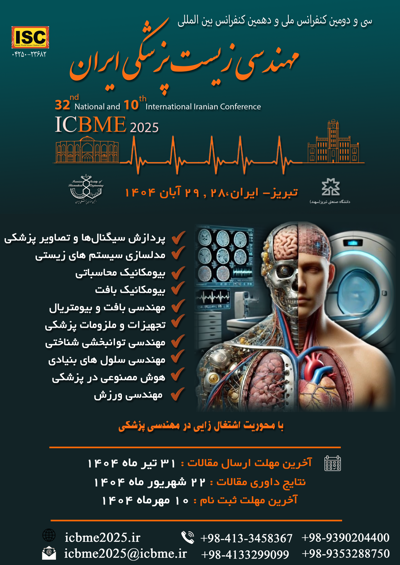
سی و دومین کنفرانس ملی و دهمین کنفرانس بین المللی مهندسی زیست پزشکی ایران
Investigating a Real-time sEMG-based Approaches for Grasping Recognition
نویسندگان :
Monire Ameri Haftador
1
Ali Akbari
2
Mehran Jahed
3
1- دانشگاه صنعتی شریف، تهران، ایران
2- دانشگاه صنعتی شریف، تهران، ایران
3- دانشگاه صنعتی شریف، تهران، ایران
کلمات کلیدی :
Hand Grasping Recognition،Surface Electromyography (sEMG)،Real-Time Systems،Short-time Fourier Transform (STFT)،Convolutional Neural Networks (CNN)
چکیده :
To fully exploit real-time prosthetics and exoskeleton assist devises, human-machine interfaces that can effectively deduce related activity and intent are essential. Surface electromyography (sEMG) provides a well-established non-invasive method for this purpose, yet two key barriers to its broad adoption are attaining recognition latency well below 200ms and preserving accuracy in presence of signal drift. In order to describe an orderly solution to these issues, this paper is a comprehensive assessment of deep learning and conventional algorithms. To establish a comprehensive scheme for targeted gesture, data was meticulously collected from individuals in the biomedical engineering lab. Furthermore, to be able to contrast the proposed method against the already reported work, a well-established publicly available dataset, namely EMG-EPN-612 was utilized. To achieve appropriate real-time accuracy, commonly used classifiers, namely Support Vector Machine (SVM), Random Forest, and Convolutional Neural Networks (CNN) were implemented and compared based on these metrics. Input was rigorously evaluated in three forms, processed signals, handcrafted features, and Short-Time Fourier Transform (STFT) images, in a bid to determine the optimal strategy. Although all these models were shown to support the required real-time constraint, however only the CNN model applied to the STFT inputs achieved the acceptable 92% accuracy on the EMG-EPN-612 dataset, as compared to SVM applied to handcrafted features of 84% accuracy on the recorded dataset. These results provide first-time explanation and trade-off between model complexity and computation cost, and required accuracy. This research provides useful recommendations that further assist in developing more effective, responsive, and accessible hand assist devices and prosthetics.
لیست مقالات
لیست مقالات بایگانی شده
Investigating the Self-optimizing nnU-NetV2 for Kidney Tumor Segmentation: Application to the KiTS23 Dataset
Sanam Doostinia - Masoud Noroozi - Mohammad Saber Azimi - Jafar Majidpour - Hossein Arabi
Comparative Evaluation of Two Keratin Extraction Methods from Kurdish Sheep Wool and Their Application in the Fabrication of Biocompatible Hydrogels with Gelation Time Analysis
Sajjad Pourabdal Nergi - Fatemeh Bagheri - Abbas Sheikh
شناسایی اسکولیوز ستون فقرات در تصاویرX-ray با استفاده از MobileNetV2
محمدصادق بابایی
تاثیر هوش مصنوعی بر تغییرات سیاست های مالی: چالش ها و فرصت ها
بهارک یادگار جمشیدی - جمال سبک دستی - زینب رضائی - امین مقتدری
ناکارایی سرمایه گذاری و ریسک درماندگی مالی: مطالعه نقش تعدیل کننده کمیته حسابرسی
رحمت اله محمدی پور - مرضیه پناهی - مینا باقری طادی
بررسی نقش هوش مصنوعی در بهینهسازی تجربه کارکنان و تقویت برند کارفرمایی در صنعت برق ایران
حسن آذری - وحیدرضا میرابی - داریوش غلامزاده
An Automatic Pipeline for Simultaneous EEG-fMRI Artifact-removal (SEFA)
Farid Hosseinzadeh - Amin Mohammad Mohammadi - Mehrdad Anvarifard - ُSasan Keshavarz - Elias Ebrahimzadeh - Hamid Soltanian-Zadeh
Region-Specific EEG Channel-Based Emotion Detection using Bi-directional Deep Neural Networks
Mahdi Jafari Asl - Sina Shamekhi - Fatemeh Shalchizadeh
Curcumin-Loaded Carboxymethyl Cellulose/Polyvinyl Alcohol Smart Wound Dressing: A Biosensor Approach for pH-Responsive Monitoring and Healing
Saeid Orangi - Soodabeh Davaran
پایداری، مسئولیت و اخلاق: مفاهیم مختلف برای یک مسیر واحد
رعنا شهدآور - ثمین مقیمی - فاطمه حسنی
بیشتر
19 اردیبهشت 1405
راهنمای انتخاب کنفرانس معتبر برای چاپ مقاله علمی
19 اردیبهشت 1405
چرا شرکت در کنفرانسهای علمی برای مصاحبه دکتری اهمیت دارد؟
21 اردیبهشت 1405
پذیرش سریع مقاله در کنفرانسهای علمی مهندسی و فناوری آغاز شد
21 اردیبهشت 1405
آغاز ثبتنام در همایشهای بینالمللی مدیریت و حسابداری
ثمین همایش، سامانه مدیریت کنفرانس ها و جشنواره ها - نگارش 44.7.0