Please wait ...
0% Complete
فارسی
Home
/
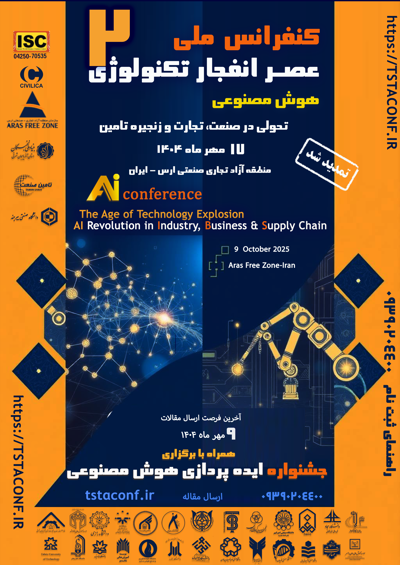
دومین کنفرانس ملی عصر انفجار تکنولوژی؛ هوش مصنوعی، تحولی در صنعت، تجارت و زنجیره تامین و دومین کنفرانس ملی علم داده در کاربردهای مهندسی
Adaptive neuro-fuzzy inference system (ANFIS) for prediction the gibbs energy of formation
Authors :
Aboozar Khajeh
1
1- Birjand University of Technology
Keywords :
Acid،Adaptive neuro-fuzzy inference system (ANFIS)،Genetic function approximation (GFA)،Gibbs free energy of formation،Group contribution (GC)،Machine learning
Abstract :
The Gibbs free energy of formation is very important property to predict the feasibility of chemical reactions, calculate equilibrium constants, and analyze reaction spontaneity. In this work, a nonlinear group contribution-based method was developed by combination of adaptive neuro-fuzzy inference system (ANFIS) and group contributions (GC) methods. In order to obtain simple and accurate model for prediction the gibbs free energy of formation of acid compounds, the genetic function approximation (GFA) method was used for selection the most important functional groups. The required parameters of the models are the numbers of occurrences of three functional groups in each investigated acid molecule, which can be computed based on chemical structure of any acid molecule. Using the ANFIS method the gibbs free energy of formation predicted with high accuracy and reliability that are quantified by the following statistical parameters: the squared correlation coefficient (R2) = 0.978, absolute average relative deviation percent (AARD %) =3.977, and the root mean squares error (RMSE) = 26.932. In general, the results obtained in this work showed that the ANFIS-GC could be a promising machine learning approach to predict the gibbs free energy of formation, or possibly other physiochemical properties of acid compounds.
Papers List
List of archived papers
راهکارهای عملی برای اجرای موفق پروژههای هوش مصنوعی در ایران
ملینا عبدلی
تاثیر حسابداری ذهنی و هوش مصنوعی بر فرآیند تصمیم گیری مالی و مزایا و معایب آن
علی نمازیان - علی رضائی پور
Optimal Control and Emergence of Kinematic Synergies in Underactuated Biped Locomotion
Mahdi Alipoor - Masoud Yousefi - Farzam Farahmand
Automated Tibial Bone Segmentation using 2D Swin-Unet on Knee X-ray Images
Ali Kazemi - Abolfazl Zamanirad - Soodabeh Esfandiary - Ebrahim Najafzadeh - Mohammad Hossein Nabian - Parastoo Farnia - Alireza Ahmadian
کاربرد هوش مصنوعی در صنعت
بهزاد بالازاده - دکتر حسین بوداقی - مرتضی محمود زاده
تحلیلی بر آموزش حسابداری در ایران
محمد رضا پور علی - آرمان محجوب
بازاریابی محتوایی هوشمند: بازآفرینی تعامل کاربران و برندها با کمک هوش مصنوعی در رسانههای اجتماعی
پریسا جعفری - سیروس فخیمی آذر - سلیمان ایرانزاده - حسین بوداقی خواجه نوبر
مروری بر کاربردهای هوش مصنوعی درصنعت
امیرپاشا گرگان نژاد - لاریسا خدادادی
نشانهشناسی گزارشگری مالی مبتنی بر xbrl
داود روحی شاهعلی بگلو رضا روحی شاهعلی بیگلو
Coronary Full artery segmentation using U-Net neural network architecture
Rezvan Monjezi - Mahdieh Ghasemi - Mahdi Salehi - Alireza Rowhanimanesh - Samaneh Tabaee
more
Samin Hamayesh - Version 44.7.0