لطفا منتظر بمانید ...
0% Complete
English
☰
صفحه اصلی
کنفرانسهای فعال
مدیریت منابع انسانی پایدار
حسابداری
بازاریابی و برندینگ در عصر هوش مصنوعی
هوش مصنوعی:نوآوری، کسبوکار و آموزش
ارشیو کنفرانسها
اولین کنفرانس ملی هوش مصنوعی
دومین کنفرانس ملی هوش مصنوعی
اولین کنگره ملی حسابداری، مالی و مالیاتی
32کنفرانس بین المللی زیست پزشکی
راهنمای شرکت
نحوه ثبتنام
ثبت نام مدیریت منابع انسانی پایدار
ثبت نام دومین کنگره ملی حسابداری
ثبت نام سومین کنفرانس ملی هوش مصنوعی
ثیت نام بازاریابی و برندینگ در عصر هوش مصنوعی
ثبت نام زنجیره ارزش نفت گاز و پتروشیمی
ارسال مقاله
فرمت مقالات مدیریت منابع انسانی پایدار
فرمت مقالات سیستم های هوشمند حسابداری
فرمت مقالات ملی بازاریابی و برندینگ در عصر هوش مصنوعی
فرمت مقالات سومین کنفرانس هوش مصنوعی
سوالات متداول
اخبار و رویدادها
درباره ما
تماس با ما
صفحه اصلی
/
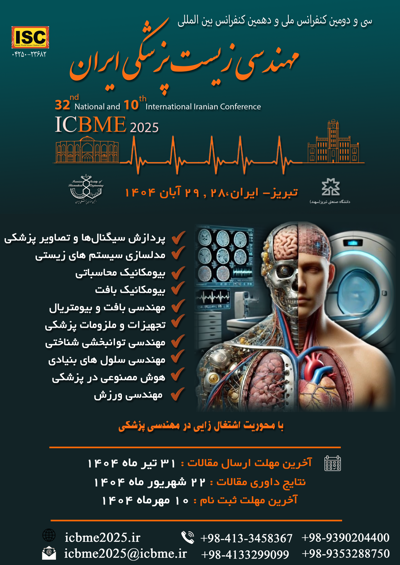
سی و دومین کنفرانس ملی و دهمین کنفرانس بین المللی مهندسی زیست پزشکی ایران
EEG-based Schizophrenia Detection Using Spectral, Entropy, and Graph Connectivity Features with Machine Learning
نویسندگان :
Nazila Ahmadi Daryakenari
1
Seyed Kamaledin Setarehdan
2
1- دانشکده برقوکامپیوتر، دانشگاه تهران
2- دانشکده برقوکامپیوتر، دانشگاه تهران
کلمات کلیدی :
Artificial Intelligence،Bandpower،EEG،Functional Connectivity،Graph Features،Machine Learning،Multiscale Permutation Entropy،Schizophrenia Detection
چکیده :
Schizophrenia is a serious mental disorder that changes the way people think, perceive, and manage daily life. Getting the diagnosis right is critical for proper treatment, but in practice it is often difficult. Current evaluations depend mostly on a clinician’s judgment, and the overlap of symptoms with bipolar disorder or major depression makes the task even harder. EEG offers a safe and noninvasive way to study brain activity, yet no single EEG feature has been reliable enough to stand on its own. This makes it important to look at integrative approaches that bring together different aspects of brain dynamics. In this study, we analyzed EEG features to distinguish patients with schizophrenia from healthy controls. Spectral power was measured across δ, θ, α, β, and γ bands. Temporal irregularity was measured with Multiscale Permutation Entropy (MPE), its first application to EEG in schizophrenia. Functional connectivity was estimated with the weighted Phase Lag Index in θ, α, and β bands, followed by the extraction of graph measures including global efficiency, clustering coefficient, characteristic path length, and mean strength. These features were used to train Random Forest, Multi-Layer Perceptron, and Support Vector Machine classifiers. Among the models, Random Forest achieved the most reliable performance, reaching 99.7% accuracy under stratified 5-fold validation and 99.6% under leave-one-subject-out validation. Feature analysis showed that connectivity in θ and α bands contributed most strongly to classification. Topographic maps of θ, α, and β activity also revealed regional group differences. Overall, the results suggest that combining spectral, entropy, and connectivity measures provides a robust framework for EEG-based detection of schizophrenia. Such integrative approaches may support the development of reliable biomarkers and bring EEG closer to practical use in psychiatric care.
لیست مقالات
لیست مقالات بایگانی شده
بررسی تاثیر ارزش ویژه برند بر هوشمند سازی رفتار تبلیغاتی مصرکنندگان موبایل با میانجیگری عشق برند
زهرا علی میرزائی - حسین بوداقی
Application of Nanomaterials in Biomaterials for the Regeneration of Bone and Cartilage Tissues
Behnaz Alijani - Niloufar Kazami
تشخیص بیماری MS با استفاده از EfficientNet-B0 و CycleGAN بر پایه نقشههای ضخامت شبکیه
محبوبه سبزه یان - مریم سبزه یان - ماندانا سادات غفوریان - امین نوری
Ethical Challenges in the Use of Artificial Intelligence: Risks, Frameworks, and Responsible Innovation
Seyed Javad Roudehchi Tabrizi - Samar Goldouz
Classification of Delta Band Motor Imagery EEG Signals in SCI Patients using the Regularized Common Temporal Pattern Method
Mahdi Babaei - Sorena Shadzinavaz - Sepideh Hajipour Sardouie
Modulation of EEG Connectivity by Insular Cortex Stimulation: Frequency-Specific Effects and Interoceptive Implications
Ramin Aghili Karampour - Alireza Fallahi - Reza Kazemi
بررسی رابطه بین تخصص مالی اعضای هیئت مدیره و سیاست تقسیم سود سهام و پیامدهای آن بر عملکرد آتی شرکتها
موسی انصاری - حمید عطایی مهر
تبیین عوامل مؤثر بازاریابی محتوای دیجیتال و هوش مصنوعی بر روابط شرکتها با برندها
حسین بوذری
پلی از شبیهسازی به عمل: انقلاب بومی هوش مصنوعی در آموزش ایران
مهتاب کرمیانی - سیران معروفی
تحلیل نقش هوش مصنوعی در تحول بازرگانی و مدیریت زنجیره تأمین: مطالعهی موردی گروه صنعتی مپنا
حسین بوذری
بیشتر
19 اردیبهشت 1405
راهنمای انتخاب کنفرانس معتبر برای چاپ مقاله علمی
19 اردیبهشت 1405
چرا شرکت در کنفرانسهای علمی برای مصاحبه دکتری اهمیت دارد؟
21 اردیبهشت 1405
پذیرش سریع مقاله در کنفرانسهای علمی مهندسی و فناوری آغاز شد
21 اردیبهشت 1405
آغاز ثبتنام در همایشهای بینالمللی مدیریت و حسابداری
ثمین همایش، سامانه مدیریت کنفرانس ها و جشنواره ها - نگارش 44.7.0