لطفا منتظر بمانید ...
0% Complete
English
☰
صفحه اصلی
کنفرانسهای فعال
مدیریت منابع انسانی پایدار
حسابداری
بازاریابی و برندینگ در عصر هوش مصنوعی
هوش مصنوعی:نوآوری، کسبوکار و آموزش
ارشیو کنفرانسها
اولین کنفرانس ملی هوش مصنوعی
دومین کنفرانس ملی هوش مصنوعی
اولین کنگره ملی حسابداری، مالی و مالیاتی
32کنفرانس بین المللی زیست پزشکی
راهنمای شرکت
نحوه ثبتنام
ثبت نام مدیریت منابع انسانی پایدار
ثبت نام دومین کنگره ملی حسابداری
ثبت نام سومین کنفرانس ملی هوش مصنوعی
ثیت نام بازاریابی و برندینگ در عصر هوش مصنوعی
ثبت نام زنجیره ارزش نفت گاز و پتروشیمی
ارسال مقاله
فرمت مقالات مدیریت منابع انسانی پایدار
فرمت مقالات سیستم های هوشمند حسابداری
فرمت مقالات ملی بازاریابی و برندینگ در عصر هوش مصنوعی
فرمت مقالات سومین کنفرانس هوش مصنوعی
سوالات متداول
اخبار و رویدادها
درباره ما
تماس با ما
صفحه اصلی
/
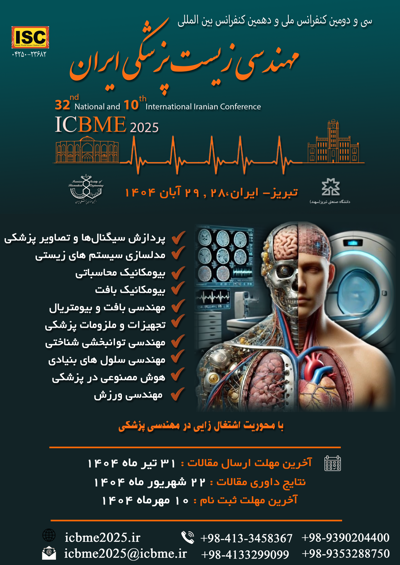
سی و دومین کنفرانس ملی و دهمین کنفرانس بین المللی مهندسی زیست پزشکی ایران
Emotion Recognition from EEG signal using GA-FLANN with Whale Optimization Algorithm
نویسندگان :
Mohammadamir Razmi
1
Pouya Faridfar
2
Seyed Amirreza Navali Hosseini alavi
3
1- Department of Aerospace Engineering, Science and Research branch, Islamic Azad University, Tehran, Iran
2- Department of computer Engineering Mashhad branch, Islamic Azad University Mashhad, Iran
3- Department of computer Engineering Mashhad branch, Islamic Azad University Mashhad, Iran
کلمات کلیدی :
EEG signal،Emotion recognition،GA-FLANN Classification،Whale Optimization Algorithm (WOA)
چکیده :
Non-verbal cues—such as intentions and emotions—are central to human communication. Electroencephalogram (EEG) signals, which record the brain’s electrical activity, offer a direct and culture-independent basis for emotion recognition. We propose a compact and efficient pipeline that uses the Whale Optimization Algorithm (WOA) as a wrapper-based feature selector and a Genetic-Algorithm-trained Functional Link Artificial Neural Network (GA-FLANN) as the classifier. EEG signals are band-pass filtered (4–40 Hz), segmented, and transformed into spectral and connectivity descriptors; WOA searches for an optimal sparse subset of discriminative features that maximizes classification performance, while GA-FLANN performs the final emotion classification. Experiments were conducted on the SJTU Emotion EEG Dataset (SEED) comprising 15 subjects, each with 64 EEG channels sampled at 1000 Hz, and involving three emotion classes (positive, neutral, negative), with comparisons against radial basis function (RBF) and Improved Self-Organizing FLANN (ISO-FLANN) baselines. On SEED, the proposed WOA–GA-FLANN achieves 98.73% accuracy and 98.13% macro-F1, improving over radial basis function (RBF) and Improved Self-Organizing FLANN (ISO-FLANN) by approximately +4.7% and +3.9%, respectively.
لیست مقالات
لیست مقالات بایگانی شده
ارائه مدل یادگیری ماشین برای پیش بینی بازار مالی قیمت مسکن مبتنی بر یادگیری عمیق
زیبا نصیری - حسین اقبالی - محمدعلی اقبالی
پیشبینی نمرات دروس دانشگاهی با استفاده از الگوریتم رگرسیون خطی در یادگیری ماشین
سجاد یوسفی - مریم پورنجف - هانیه شیری
بررسی تأثیر ابزارهای خلاق مبتنی بر هوش مصنوعی بر ایدهپردازی دانشجویان
ندا پرتونیا
مدلسازی عددی اندرکنش آکوستیک - سیال برای بهبود کیفیت اختلاط در میکروکانال سامانههای زیستی
رسول عدلی بیله سوار - فرهاد صادق مغانلو - محمد وجدی حکم آباد
بررسی نقش شفافیت اطلاعات مالی و حسابرسی مالیاتی در بهبود تمکین مالیاتی و تأثیر آن بر رشد اقتصادی پایدار
الهه آقاخانی - مرتضی خانلاری
Phase-Amplitude Coupling of Event-Related Potentials during VCPT Task in Dyslexic Subjects
Mahdi Mollaei - Maryam Mohebbi - Reza Rostami
تحلیلی جامع بر روندهای نوین بازاریابی محتوایی در فروشگاههای آنلاین در سالهای ۲۰۲۴ و ۲۰۲۵
سید رامان سیدی - آرش احمدی - مریم باباپیری
بررسی سه روش شبکه های عصبی بازمانده ، شبکه عصبی کانولوشنی و مدل های حافظه کوتاه مدت در شناسایی اخبار جعلی
بهاره هاشم زاده - مجید عبدالرزاق نژاد
پیش بینی بار الکتریکی کوتاه مدت در شبکه شرکت برق منطقه ای آذربایجان با استفاده از سیستم فازی
محمدرضا رستمی نوشهر - لاریسا خدادادی - حسین خون جهان - عبدالحسین شاکری
مخابرات و اینترنت اشیا: زیرساختهای نوین برای اقتصاد دیجیتال
سجاد یوسفی - مریم پورنجف - آمنه احمدی - شکوفه گرینی - حسنا هاشم بیگی
بیشتر
19 اردیبهشت 1405
راهنمای انتخاب کنفرانس معتبر برای چاپ مقاله علمی
19 اردیبهشت 1405
چرا شرکت در کنفرانسهای علمی برای مصاحبه دکتری اهمیت دارد؟
21 اردیبهشت 1405
پذیرش سریع مقاله در کنفرانسهای علمی مهندسی و فناوری آغاز شد
21 اردیبهشت 1405
آغاز ثبتنام در همایشهای بینالمللی مدیریت و حسابداری
ثمین همایش، سامانه مدیریت کنفرانس ها و جشنواره ها - نگارش 44.7.0