لطفا منتظر بمانید ...
0% Complete
English
☰
صفحه اصلی
کنفرانسهای فعال
مدیریت منابع انسانی پایدار
حسابداری
بازاریابی و برندینگ در عصر هوش مصنوعی
هوش مصنوعی:نوآوری، کسبوکار و آموزش
ارشیو کنفرانسها
اولین کنفرانس ملی هوش مصنوعی
دومین کنفرانس ملی هوش مصنوعی
اولین کنگره ملی حسابداری، مالی و مالیاتی
32کنفرانس بین المللی زیست پزشکی
راهنمای شرکت
نحوه ثبتنام
ثبت نام مدیریت منابع انسانی پایدار
ثبت نام دومین کنگره ملی حسابداری
ثبت نام سومین کنفرانس ملی هوش مصنوعی
ثیت نام بازاریابی و برندینگ در عصر هوش مصنوعی
ثبت نام زنجیره ارزش نفت گاز و پتروشیمی
ارسال مقاله
فرمت مقالات مدیریت منابع انسانی پایدار
فرمت مقالات سیستم های هوشمند حسابداری
فرمت مقالات ملی بازاریابی و برندینگ در عصر هوش مصنوعی
فرمت مقالات سومین کنفرانس هوش مصنوعی
سوالات متداول
اخبار و رویدادها
درباره ما
تماس با ما
صفحه اصلی
/
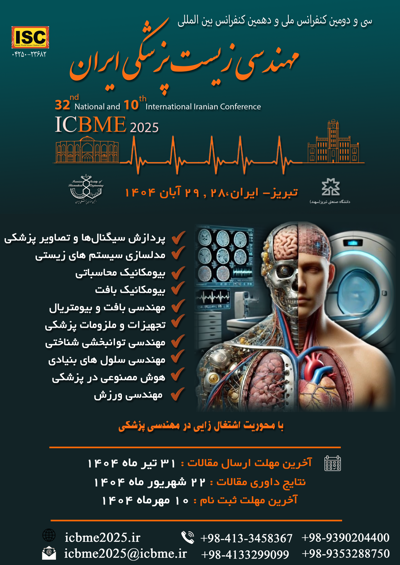
سی و دومین کنفرانس ملی و دهمین کنفرانس بین المللی مهندسی زیست پزشکی ایران
Automated Tibial Bone Segmentation using 2D Swin-Unet on Knee X-ray Images
نویسندگان :
Ali Kazemi
1
Abolfazl Zamanirad
2
Soodabeh Esfandiary
3
Ebrahim Najafzadeh
4
Mohammad Hossein Nabian
5
Parastoo Farnia
6
Alireza Ahmadian
7
1- دانشگاه علوم پزشکی تهران
2- دانشگاه علوم پزشکی تهران
3- دانشگاه علوم پزشکی تهران
4- دانشگاه علوم پزشکی ایران
5- دانشگاه علوم پزشکی تهران
6- دانشگاه علوم پزشکی تهران
7- دانشگاه علوم پزشکی تهران
کلمات کلیدی :
Tibial Plateau Fracture،Medical Image Segmentation،Swin-Unet،X-ray Imaging،Deep Learning
چکیده :
Tibial plateau fractures (TPFs), which account for approximately 1% of all bone fractures, represent a complex subset of knee injuries with significant clinical implications if not accurately diagnosed and managed. The accurate diagnosis of TPFs from radiographs is challenged by subtle fracture lines and significant inter-observer variability in manual segmentation. To address these limitations, this study evaluates the performance of a Transformer-based deep learning model, Swin-Unet, for automated and precise tibial segmentation. A retrospective dataset comprising 958 anterior-posterior and lateral radiographs from 220 patients with TPFs was curated. Ground truth masks of the tibia bone were manually annotated and validated through a multi-stage review by orthopedic surgeons. Following preprocessing steps, including contrast enhancement with Contrast Limited Adaptive Histogram Equalization (CLAHE), a 2D Swin-Unet architecture featuring patch-based self-attention mechanisms was trained. The optimized Swin-Unet model demonstrated high fidelity, achieving a mean Dice Similarity Coefficient (DSC) of 0.8314, a mean Intersection over Union (IoU) of 0.7374, and an overall accuracy of 0.9735 on the validation set. Qualitative analysis confirmed the model's ability to accurately delineate tibial boundaries. In conclusion, this study validates the Swin-Unet model as a robust and efficient framework for automated tibial segmentation. By mitigating the challenges of manual delineation, this approach holds significant promise for improving the consistency of orthopedic diagnostic workflows. It serves as a foundation for AI-driven clinical decision support in musculoskeletal imaging.
لیست مقالات
لیست مقالات بایگانی شده
Transforming Sentiment Analysis with a New LLM Architecture
Hossein Gholamalinejad - Tahoora Ramezanimoghaddam
تاثیر مسئولیت اجتماعی شرکت ها بر شهرت برند و ارزش ویژه برند (نمونه موردی گالری چرم امینی)
لیلا امینی راد
ارزیابی عملکرد در سازمانهای پست مدرن
مهدی خضوعی
Artificial Intelligence in the medical fields : cardiovascular disease
Elham Rasoulian leilabadi - Soodabeh Davaran
In-silico Molecular Investigation of Caloubater crescentus Bioadhesive Proteins
Yeganeh Kayalha - Maryam Azimzadeh Irani
Brain Network Reconfiguration During Creative Playmaking: A Task-fMRI Study
Mohammd Rezaei - Mahdi Siami - Asghar Zarei - Alireza Talesh Jafadideh
تاثیر هوش مصنوعی و فناوری های نوین بر بهبود بودجهبندی دولتی و کنترل مالی
مهدی زینالی - بهزاد محمودی - سمیه علیمرادی اشقلو
استقرار حاکمیت شرکتی در هوش مصنوعی در جهت منافع عمومی
رعنا شهدآور - الهام رضا پور - وحید حسین زاده قویدل - آیسان صدقی
EEG Graph Construction: A Comparative Analysis for Classification Application
Kiana Kalantari - Mohammad Bagher Shamsollahi
یشبینی فرار مالیاتی مؤدیان حقوقی با تاکید بر مولفههای اقتصادی، مؤدیان و حسابرسان مالیاتی؛ با تکیه بر هوش مصنوعی
حسین بوذری
بیشتر
19 اردیبهشت 1405
راهنمای انتخاب کنفرانس معتبر برای چاپ مقاله علمی
19 اردیبهشت 1405
چرا شرکت در کنفرانسهای علمی برای مصاحبه دکتری اهمیت دارد؟
21 اردیبهشت 1405
پذیرش سریع مقاله در کنفرانسهای علمی مهندسی و فناوری آغاز شد
21 اردیبهشت 1405
آغاز ثبتنام در همایشهای بینالمللی مدیریت و حسابداری
ثمین همایش، سامانه مدیریت کنفرانس ها و جشنواره ها - نگارش 44.7.0