لطفا منتظر بمانید ...
0% Complete
English
☰
صفحه اصلی
کنفرانسهای فعال
مدیریت منابع انسانی پایدار
حسابداری
بازاریابی و برندینگ در عصر هوش مصنوعی
هوش مصنوعی:نوآوری، کسبوکار و آموزش
ارشیو کنفرانسها
اولین کنفرانس ملی هوش مصنوعی
دومین کنفرانس ملی هوش مصنوعی
اولین کنگره ملی حسابداری، مالی و مالیاتی
32کنفرانس بین المللی زیست پزشکی
راهنمای شرکت
نحوه ثبتنام
ثبت نام مدیریت منابع انسانی پایدار
ثبت نام دومین کنگره ملی حسابداری
ثبت نام سومین کنفرانس ملی هوش مصنوعی
ثیت نام بازاریابی و برندینگ در عصر هوش مصنوعی
ثبت نام زنجیره ارزش نفت گاز و پتروشیمی
ارسال مقاله
فرمت مقالات مدیریت منابع انسانی پایدار
فرمت مقالات سیستم های هوشمند حسابداری
فرمت مقالات ملی بازاریابی و برندینگ در عصر هوش مصنوعی
فرمت مقالات سومین کنفرانس هوش مصنوعی
سوالات متداول
اخبار و رویدادها
درباره ما
تماس با ما
صفحه اصلی
/
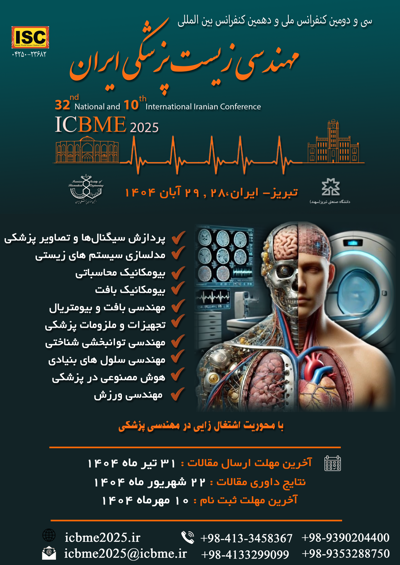
سی و دومین کنفرانس ملی و دهمین کنفرانس بین المللی مهندسی زیست پزشکی ایران
Vibration-Based Assessment of Dental Implants: A Finite Element Study on Bone Quality and Boundary Conditions
نویسندگان :
Fatima Wayzani
1
Mohammadjavad (Matin) Einafshar
2
Ata Hashemi
3
1- Amirkabir University of Technology
2- Aalborg University, Denmark
3- Amirkabir University of Technology
کلمات کلیدی :
Modal analysis،Dental implant stability،Natural frequency،Boundary constraints،Bone quality،Bone substitute materials
چکیده :
Background: Dental implant stability is critical to the long-term success of implantology, as it is influenced by factors such as bone quality, implant design, and boundary conditions. Modal analysis offers a non-invasive method to assess implant stability by evaluating the natural frequency of the implant system. Objectives: To investigate the natural frequency of dental implants under different boundary constraints, mandible sizes, bone qualities, and the presence of a bone substitutive layer. Materials and Methods: Modal analysis was performed on a three-dimensional finite element model of a biphasic healing titanium dental implant and mandibular bone. Both "long" and "short" mandibular geometries were considered. Three boundary conditions were applied, and the influence of different bone qualities (types I, II, III, and IV) was examined. The effect of bone substitutive layers (magnesium phosphate, hydroxyapatite, PMMA) with varying thicknesses (300 μm and 800 μm) was also assessed. Results: The natural frequency of the dental implant system was significantly higher in the "short" mandible model (13,959 Hz, 14,332 Hz, and 15,111 Hz for the first three modes) compared to the "long" mandible model (3,826 Hz, 6,851 Hz, and 7,565 Hz for bone type IV). Increasing the number of boundary constraints led to an increase in natural frequency, with the first mode frequency rising from 1,786 Hz (one side fixed) to 5,650 Hz (three sides fixed) for bone type IV. The highest natural frequencies were observed in bone type I (65,204 Hz, 82,039 Hz, and 83,958 Hz for the first three modes in the short mandible model). The presence of a bone substitutive layer, regardless of material type or thickness, had a negligible impact on natural frequency, with variations of less than 1% compared to the control model. Conclusions: For a successful dental implantology process, primary stability should be verified before surgery. Bone quality significantly affects implant stability, with higher natural frequencies observed in denser bone. Bone substitutive materials, while important for osseointegration, do not markedly affect the implant's natural frequency when applied in thin layers.
لیست مقالات
لیست مقالات بایگانی شده
نقش هوش مصنوعی در افزایش انطباق مالیاتی و مقررات مالی
مهدی ریسمان گشا
Excessive and Variable Center of Mass Motion Characterizes Gait Instability In Women with Obese Knee Osteoarthritis
Diba Chegini - Behzad Yasrebi - Siamak Haghipour - Farhad Farhad Tabatabai Ghomsheh - Aliakbar Pahlevanian
Simulations of Body–Exoskeleton Interaction using OpenSim–MATLAB Interface
Mohammad-Reza Sayyed Noorani - Hesam Ghasemi Barghi - Shaghayegh Hassanzadeh Khanmiri
بهبود امنیت شبکههای رایانش ابری مبتنی بر معماری OpenFlow با استفاده از SVM
سویل قنبرزاده چاوشی
Finite Element Analysis of Spine ProDisc-L Using Titanium, CFR-PEEK and CoCr Endplates with UHMWPE-GUR1020 75kGy RM Core
Amirali Kashani - Siavash Kazemirad
علم داده به عنوان شتابدهنده نوآوری در صنعت مهندسی
رامین احمدپور
Injectability Enhancement and Optimization of a Biphasic Calcium Phosphate Bone Cement
Sepehr Larijani - Mitra Asadi-Eydivand - Nabiollah Abolfathi - Mehran Solati-Hashjin
Feature-Conditioned WGAN for Generating Alzheimer’s EEG: Enabling GAN-Based Synthesis Under Data Scarcity
Parsa Bahramsari - Alireza Taheri
شبیهسازی المان محدود رفتار ناهمسانگرد لیگامان پریودنتال بر اساس توزیع سهبعدی فیبرهای کلاژن
محیا بناپور نجاری - علی ولایی - هادی تقیزاده
تاثیر عدم نقد شوندگی سهام بر خطر سقوط قیمت سهام با تاکید بر مالکیت مدیریتی
ناهیده شاهنده ننه کران - عرفان اصغرپور فخری وند
بیشتر
19 اردیبهشت 1405
راهنمای انتخاب کنفرانس معتبر برای چاپ مقاله علمی
19 اردیبهشت 1405
چرا شرکت در کنفرانسهای علمی برای مصاحبه دکتری اهمیت دارد؟
21 اردیبهشت 1405
پذیرش سریع مقاله در کنفرانسهای علمی مهندسی و فناوری آغاز شد
21 اردیبهشت 1405
آغاز ثبتنام در همایشهای بینالمللی مدیریت و حسابداری
ثمین همایش، سامانه مدیریت کنفرانس ها و جشنواره ها - نگارش 44.7.0