لطفا منتظر بمانید ...
0% Complete
English
☰
صفحه اصلی
کنفرانسهای فعال
مدیریت منابع انسانی پایدار
حسابداری
بازاریابی و برندینگ در عصر هوش مصنوعی
هوش مصنوعی:نوآوری، کسبوکار و آموزش
ارشیو کنفرانسها
اولین کنفرانس ملی هوش مصنوعی
دومین کنفرانس ملی هوش مصنوعی
اولین کنگره ملی حسابداری، مالی و مالیاتی
32کنفرانس بین المللی زیست پزشکی
راهنمای شرکت
نحوه ثبتنام
ثبت نام مدیریت منابع انسانی پایدار
ثبت نام دومین کنگره ملی حسابداری
ثبت نام سومین کنفرانس ملی هوش مصنوعی
ثیت نام بازاریابی و برندینگ در عصر هوش مصنوعی
ثبت نام زنجیره ارزش نفت گاز و پتروشیمی
ارسال مقاله
فرمت مقالات مدیریت منابع انسانی پایدار
فرمت مقالات سیستم های هوشمند حسابداری
فرمت مقالات ملی بازاریابی و برندینگ در عصر هوش مصنوعی
فرمت مقالات سومین کنفرانس هوش مصنوعی
سوالات متداول
اخبار و رویدادها
درباره ما
تماس با ما
صفحه اصلی
/
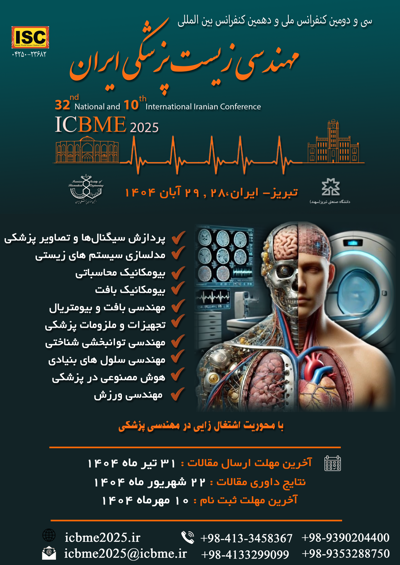
سی و دومین کنفرانس ملی و دهمین کنفرانس بین المللی مهندسی زیست پزشکی ایران
Benchmarking Class Activation Map Methods for Explainable Brain Hemorrhage Classification on Hemorica Dataset
نویسندگان :
Zahra Rafati
1
Mohamad Hoseyni
2
Javad Khoramdel
3
Amirhossein Nikoofard
4
1- دانشگاه صنعتی خواجه نصیرالدین طوسی
2- دانشگاه صنعتی خواجه نصیرالدین طوسی
3- دانشگاه تربیت مدرس
4- دانشگاه صنعتی خواجه نصیرالدین طوسی
کلمات کلیدی :
Explainable Artificial Intelligence،Class Activation Map،Brain Hemorrhage Classification،Deep Learning
چکیده :
Explainable Artificial Intelligence (XAI) has become an essential component of medical imaging research, aiming to increase transparency and clinical trust in deep learning models. This study investigates brain hemorrhage diagnosis with a focus on explainability through Class Activation Mapping (CAM) techniques. A pipeline was developed to extract pixellevel segmentation and detection annotations from classification models using nine state-of-the-art CAM algorithms, applied across multiple network stages, and quantitatively evaluated on the Hemorica [1] dataset, which uniquely provides both slice-level labels and high-quality segmentation masks. Metrics including Dice, IoU, and pixel-wise overlap were employed to benchmark CAM variants. Results show that the strongest localization performance occurred at stage 5 of EfficientNetV2-S, with HiResCAM yielding the highest bounding-box alignment and AblationCAM achieving the best pixel-level Dice (≈ 0.57) and IoU (≈ 0.40), representing strong accuracy given that models were trained solely for classification without segmentation supervision. To the best of current knowledge, this is among the first works to quantitatively compare CAM methods for brain hemorrhage detection, establishing a reproducible benchmark and underscoring the potential of XAI-driven pipelines for clinically meaningful AI-assisted diagnosis.
لیست مقالات
لیست مقالات بایگانی شده
A Computational Model of Phase-Delayed Balanced Biphasic Deep Brain Stimulation for Essential Tremor in a Cerebellar-Basal Ganglia-Thalamocortical Network
Shabnam Andalibi Miandoab - Nazlar Ghasemzadeh
Antimicrobial and Bioactivity Evaluation of Laser-Modified Biodegradable Magnesium Alloy Coated with Chitosan–Graphene Oxide
Seyed Alireza Ensaniat - Ali Safary - Farid Naeimi - Hamid Reza Bakhsheshi Rad - Monireh Ganjali
مروری بر ترجمه زبان های ناشناخته یا باستانی با استفاده از یادگیری عمیق
علی عبدالعظیمی - سید حسن مرتضوی
مروری بر روشهای هوشمند مدیریت فرسودگی لینکهای عمودی در شبکههای روی تراشه سهبعدی
سید محمد آذرشین - رضا فرشیدی - امین مهرانزاده
Hierarchical STFT based Transformer for Causality discovery
Sahar Semsarha - Mohammad bagher Shamsolahi
Diagnosis of Multiple Sclerosis Using Recurrence Plot of EEG
Neda Baghestani - Amin Janghorbani
مدیریت منابع انسانی با رویکرد هوش مصنوعی: مدیریت هوشمند داده محور
محمدرضا دلوی - مصطفی طغیانی پزوه
Performance Evaluation of Supervised Machine Learning Algorithms for Customer Classification in E-Commerce
Somayeh Ebrahimi Emamchai
آینده پژوهی در سیستم های دستیار راننده: فناوریهای نوظهور
مهدی سیفی پور - رادمان نویدپور - محدثه پرویزی - سیامک محمدی
Assessing the Risk of Musculoskeletal Injuries of Workers at the Warehousing Workstation of Iran Tire Company
Mahshad Nazari Jeirani - Amirhossein Mohammadzadeh - Seyedeh Shokouh Azam Mirdamadi - Mohadeseh Sadat Shahangian - Navid Arjmand
بیشتر
19 اردیبهشت 1405
راهنمای انتخاب کنفرانس معتبر برای چاپ مقاله علمی
19 اردیبهشت 1405
چرا شرکت در کنفرانسهای علمی برای مصاحبه دکتری اهمیت دارد؟
21 اردیبهشت 1405
پذیرش سریع مقاله در کنفرانسهای علمی مهندسی و فناوری آغاز شد
21 اردیبهشت 1405
آغاز ثبتنام در همایشهای بینالمللی مدیریت و حسابداری
ثمین همایش، سامانه مدیریت کنفرانس ها و جشنواره ها - نگارش 44.7.0