لطفا منتظر بمانید ...
0% Complete
English
☰
صفحه اصلی
کنفرانسهای فعال
مدیریت منابع انسانی پایدار
حسابداری
بازاریابی و برندینگ در عصر هوش مصنوعی
هوش مصنوعی:نوآوری، کسبوکار و آموزش
ارشیو کنفرانسها
اولین کنفرانس ملی هوش مصنوعی
دومین کنفرانس ملی هوش مصنوعی
اولین کنگره ملی حسابداری، مالی و مالیاتی
32کنفرانس بین المللی زیست پزشکی
راهنمای شرکت
نحوه ثبتنام
ثبت نام مدیریت منابع انسانی پایدار
ثبت نام دومین کنگره ملی حسابداری
ثبت نام سومین کنفرانس ملی هوش مصنوعی
ثیت نام بازاریابی و برندینگ در عصر هوش مصنوعی
ثبت نام زنجیره ارزش نفت گاز و پتروشیمی
ارسال مقاله
فرمت مقالات مدیریت منابع انسانی پایدار
فرمت مقالات سیستم های هوشمند حسابداری
فرمت مقالات ملی بازاریابی و برندینگ در عصر هوش مصنوعی
فرمت مقالات سومین کنفرانس هوش مصنوعی
سوالات متداول
اخبار و رویدادها
درباره ما
تماس با ما
صفحه اصلی
/
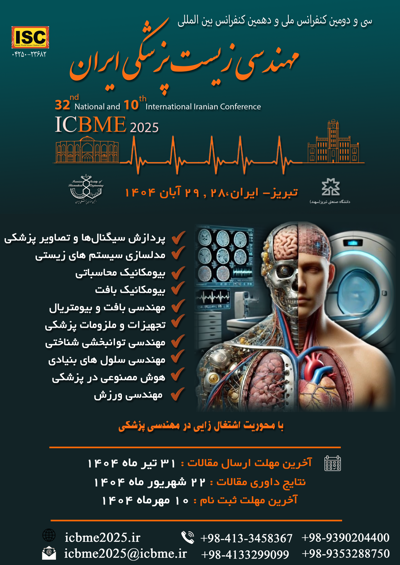
سی و دومین کنفرانس ملی و دهمین کنفرانس بین المللی مهندسی زیست پزشکی ایران
Investigating the Self-optimizing nnU-NetV2 for Kidney Tumor Segmentation: Application to the KiTS23 Dataset
نویسندگان :
Sanam Doostinia
1
Masoud Noroozi
2
Mohammad Saber Azimi
3
Jafar Majidpour
4
Hossein Arabi
5
1- دانشگاه صنعتی خواجه نصیرالدین طوسی
2- دانشگاه اصفهان
3- دانشگاه شهید بهشتی
4- University of Raparin Rania, Iraq
5- Geneva University Hospital
کلمات کلیدی :
Deep Learning،Medical Image Segmentation،nnU-NetV2،Kidney Tumor Segmentation
چکیده :
Kidney cancer ranks among the top 10 most prevalent cancers, with renal cell carcinoma (RCC) being the dominant form, accounting for approximately 90% of all kidney cancer cases. As computer technology advances unprecedentedly, its integration into the medical field, particularly in computer-aided diagnostics and treatment, has grown significantly. In this work, we evaluate the nnU-NetV2 segmentation model on the kidney tumor segmentation dataset (KiTS2023). The 3D nnU-NetV2 model was trained for 300 Epochs with single-fold validation, using 320 CT scans from the retrospective KiTS23 dataset, with 80 cases for validation and 89 cases for testing. The evaluation metrics Dice Similarity Coefficient (DSC), IoU (Intersection over Union), sensitivity, and specificity were applied to assess performance in both region-based and foreground segmentation. Test-set DSC values were 0.8334 (Kidney+Tumor+Cyst), 0.6678 (Tumor+Cyst), and 0.6009 (Tumor); IoU scores were 0.7705, 0.5621, and 0.5078, respectively. Sensitivity values were 0.7915, 0.6743, and 0.6459, respectively, and specificity remained consistently high at 0.99 across all regions. For foreground segmentation on the test set, DSC was 0.7007, and IoU was 0.6135. Despite using a relatively low number of epochs and single-fold validation, comparison with the benchmark results demonstrates that the nnU-Net model remains a robust tool for automatic kidney tumor segmentation.
لیست مقالات
لیست مقالات بایگانی شده
Numerical investigation of the effectiveness of cryosurgery on a liver tumor
Taha Samiazar - Mahkame Sharbatdar
Short-term gains vs. long-term Success: Reward strategy design for reinforcement learning in football
Mohammad Pashaei - Amirhossein Tayebi - Hadi Amiri - Ali Fahim
سامانه هوشمند مبتنی بر بینایی ماشین برای تشخیص افتادن سالمندان: رویکردی ایمن، دقیق و سریع
سیدحسن نوری - هدی محمدزاده
نقش یادگیری عمیق در توسعه هوش مصنوعی و کاربردهای آن در صنعت، تجارت و زنجیره تأمین
آیدا مهرنیا
یکپارچه سازی منابع و عملکرد شرکت از طریق قابلیت های سازمانی برای تحول دیجیتال
ناهیده شاهنده ننه کران - بیتا دلنواز
Modulation of EEG Connectivity by Insular Cortex Stimulation: Frequency-Specific Effects and Interoceptive Implications
Ramin Aghili Karampour - Alireza Fallahi - Reza Kazemi
Biomechanical Contrast Between Native and Decellularized Triple-Negative Breast Tumors in Mice
Mohammad Javad Farjam - Saman Asadi - Ashkan Azimzadeh - Saeid Amanpour - AbdolMohammad Kajbafzadeh - Mohammad Ali Nazari
بررسی عوامل موثر بر بهبود مالیات ستانی از اقتصاد دیجیتال در کشور (مورد مطالعه سازمان امور مالیاتی استان تهران)
نسار احمدی - ملک تاج ملکی اسکوئی
A Review of the Impact of Visible Spectrum Electromagnetic Wavelengths on Cellular Behaviors
Arsalan Heidarpanah - Hamid Keshvari - Mehrdad Saviz
پایش هوشمند دیابت به کمک اینترنت اشیا و دادهکاوی: گامی نوین در مراقبتهای سلامت دیجیتال
سیده عارفه رضوی - وحید جمشیدی - محبوبه طالبی - ملیکا ناصری
بیشتر
19 اردیبهشت 1405
راهنمای انتخاب کنفرانس معتبر برای چاپ مقاله علمی
19 اردیبهشت 1405
چرا شرکت در کنفرانسهای علمی برای مصاحبه دکتری اهمیت دارد؟
21 اردیبهشت 1405
پذیرش سریع مقاله در کنفرانسهای علمی مهندسی و فناوری آغاز شد
21 اردیبهشت 1405
آغاز ثبتنام در همایشهای بینالمللی مدیریت و حسابداری
ثمین همایش، سامانه مدیریت کنفرانس ها و جشنواره ها - نگارش 44.7.0