لطفا منتظر بمانید ...
0% Complete
English
☰
صفحه اصلی
کنفرانسهای فعال
مدیریت منابع انسانی پایدار
حسابداری
بازاریابی و برندینگ در عصر هوش مصنوعی
هوش مصنوعی:نوآوری، کسبوکار و آموزش
ارشیو کنفرانسها
اولین کنفرانس ملی هوش مصنوعی
دومین کنفرانس ملی هوش مصنوعی
اولین کنگره ملی حسابداری، مالی و مالیاتی
32کنفرانس بین المللی زیست پزشکی
راهنمای شرکت
نحوه ثبتنام
ثبت نام مدیریت منابع انسانی پایدار
ثبت نام دومین کنگره ملی حسابداری
ثبت نام سومین کنفرانس ملی هوش مصنوعی
ثیت نام بازاریابی و برندینگ در عصر هوش مصنوعی
ثبت نام زنجیره ارزش نفت گاز و پتروشیمی
ارسال مقاله
فرمت مقالات مدیریت منابع انسانی پایدار
فرمت مقالات سیستم های هوشمند حسابداری
فرمت مقالات ملی بازاریابی و برندینگ در عصر هوش مصنوعی
فرمت مقالات سومین کنفرانس هوش مصنوعی
سوالات متداول
اخبار و رویدادها
درباره ما
تماس با ما
صفحه اصلی
/
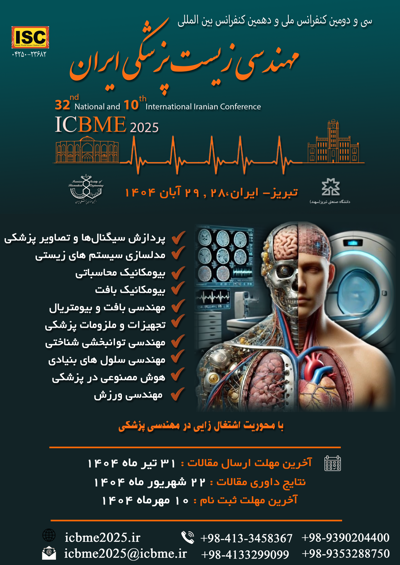
سی و دومین کنفرانس ملی و دهمین کنفرانس بین المللی مهندسی زیست پزشکی ایران
Comparative Hemodynamic Analysis of Bicuspid and Tricuspid Aortic Valves Through CFD Simulation
نویسندگان :
Taha Samiazar
1
Mouoode Allahyari
2
Reyhaneh Mosaferchi
3
Julio Garcia Flores
4
Nasser Fatouraee
5
1- Amirkabir University of Technology
2- Amirkabir University of Technology
3- Amirkabir University of Technology
4- Department of Biomedical Engineering, University of Calgary, Calgary, Canada
5- Amirkabir University of Technology
کلمات کلیدی :
4D-MRI،Hemodynamics،Cardiac Biomechanics
چکیده :
4D-MRI imaging offers dynamic visualization of cardiac blood flow, but its limited spatial resolution can restrict the accuracy of hemodynamic quantification. To address this, we present an integrated framework combining 4D-MRI data with computational fluid dynamics (CFD) simulations to enhance the precision of flow analysis in patient-specific aortic geometries. In this study, 4D-MRI data from a patient with bicuspid aortic valve (BAV) disease were used to reconstruct the aortic anatomy. To reduce computational complexity while preserving physiologically relevant flow features, the geometry was simplified by removing nonessential anatomical structures. Idealized valve models were developed for both BAV and tricuspid aortic valve (TAV) configurations. Importantly, both geometries were reconstructed to represent pre-disease anatomy, enabling comparative analysis of baseline hemodynamic conditions. A hybrid valve model was also created by integrating features from both types of valves. CFD simulations were performed under consistent boundary conditions across all configurations. Key hemodynamic metrics—including wall shear stress, oscillatory shear index (OSI), and velocity fields—were quantified and validated against 4D-MRI measurements, demonstrating strong agreement. Comparative results revealed significant differences in shear stress distribution, OSI patterns, and flow organization between valve types, underscoring the influence of valve morphology on aortic hemodynamics. This integrated CFD–4D MRI approach provides novel, patient-specific insights that may inform clinical decision-making, surgical planning, and valve repair strategies.
لیست مقالات
لیست مقالات بایگانی شده
Diagnostic and Classification Analysis of Retinal Diseases Using OCT Imaging: Focus on Diabetic Retinopathy and Overlap with Other Retinal Disorders
Fatemeh Reyhani - Yashar Amizadeh - Ata Jodeiri
بازاریابی محتوایی هوشمند: بازآفرینی تعامل کاربران و برندها با کمک هوش مصنوعی در رسانههای اجتماعی
پریسا جعفری - سیروس فخیمی آذر - سلیمان ایرانزاده - حسین بوداقی خواجه نوبر
بررسی و تحلیل عملکرد در زمینه توازن بار ترافیکی برای رایانش ابری
فروزان هاشمی - غلامرضا احمدی
ساخت و انتقال ریزقطرات مغناطیسی در تراشه مایکروفلوئیدیک
نازنین پژوهیده - روزبه عابدینی نسب - مینا صوفی زمرد
اینترنت اشیا:امنیت و کاربرد ها در پزشکی و صنعت
سجاد یوسفی - مریم پورنجف - مبینا رضایی
اتوماسیون هوش مصنوعی کلید موفقیت در آینده تولید
مهدی بشیرزاده
بررسی سفته و سفته الکترونیکی از دیدگاه حقوقی تجارت الکترونیک
دانیال کریم زاده - صالح ترابی گودرزی
مروری بر برخی کاربردهای هوش مصنوعی در تجارت عصر حاضر
لیلی روح بخش
هوش مصنوعی و آینده بشریت با رویکرد مالی و اقتصادی
مهدی زینالی - شبنم بالازاده قره باغی - مهدیه نامی بسیط
شیوه های حسابداری منابع انسانی و تاثیر آنها بر عملکرد مدیریت
مرضیه ساداتی
بیشتر
19 اردیبهشت 1405
راهنمای انتخاب کنفرانس معتبر برای چاپ مقاله علمی
19 اردیبهشت 1405
چرا شرکت در کنفرانسهای علمی برای مصاحبه دکتری اهمیت دارد؟
21 اردیبهشت 1405
پذیرش سریع مقاله در کنفرانسهای علمی مهندسی و فناوری آغاز شد
21 اردیبهشت 1405
آغاز ثبتنام در همایشهای بینالمللی مدیریت و حسابداری
ثمین همایش، سامانه مدیریت کنفرانس ها و جشنواره ها - نگارش 44.7.0