لطفا منتظر بمانید ...
0% Complete
English
☰
صفحه اصلی
کنفرانسهای فعال
مدیریت منابع انسانی پایدار
حسابداری
بازاریابی و برندینگ در عصر هوش مصنوعی
هوش مصنوعی:نوآوری، کسبوکار و آموزش
ارشیو کنفرانسها
اولین کنفرانس ملی هوش مصنوعی
دومین کنفرانس ملی هوش مصنوعی
اولین کنگره ملی حسابداری، مالی و مالیاتی
32کنفرانس بین المللی زیست پزشکی
راهنمای شرکت
نحوه ثبتنام
ثبت نام مدیریت منابع انسانی پایدار
ثبت نام دومین کنگره ملی حسابداری
ثبت نام سومین کنفرانس ملی هوش مصنوعی
ثیت نام بازاریابی و برندینگ در عصر هوش مصنوعی
ثبت نام زنجیره ارزش نفت گاز و پتروشیمی
ارسال مقاله
فرمت مقالات مدیریت منابع انسانی پایدار
فرمت مقالات سیستم های هوشمند حسابداری
فرمت مقالات ملی بازاریابی و برندینگ در عصر هوش مصنوعی
فرمت مقالات سومین کنفرانس هوش مصنوعی
سوالات متداول
اخبار و رویدادها
درباره ما
تماس با ما
صفحه اصلی
/
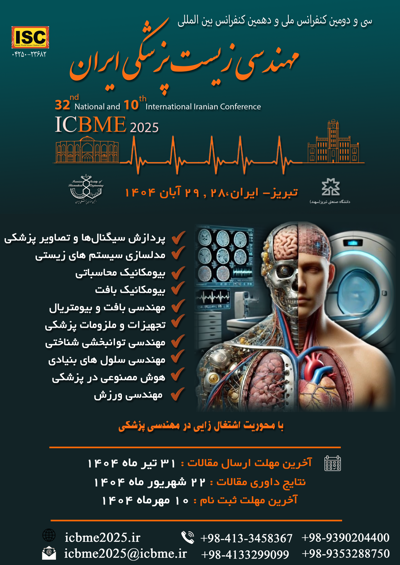
سی و دومین کنفرانس ملی و دهمین کنفرانس بین المللی مهندسی زیست پزشکی ایران
Feature-Conditioned WGAN for Generating Alzheimer’s EEG: Enabling GAN-Based Synthesis Under Data Scarcity
نویسندگان :
Parsa Bahramsari
1
Alireza Taheri
2
1- Social and Cognitive Robotics Lab, Department of Mechanical Engineering, Sharif University of Technology, Tehran, Iran
2- Social and Cognitive Robotics Lab, Department of Mechanical Engineering, Sharif University of Technology, Tehran, Iran
کلمات کلیدی :
Alzheimer’s disease،Electroencephalography،Conditional Wasserstein GAN،Feature matching،Synthetic data generation
چکیده :
Alzheimer’s disease (AD) significantly impairs cognitive function, making early detection and personalized care crucial. Electroencephalography (EEG) provides a non-invasive, low-cost window into cortical oscillations and is sensitive to AD-related spectral slowing and reduced temporal complexity. However, acquiring high-quality EEG data is often limited by factors such as patient fatigue, session variability, and logistical challenges, especially in environments like socially assistive robots (SARs). These constraints make it difficult to gather sufficient data for training reliable deep models for AD detection. To address this challenge, we propose a feature-conditioned Wasserstein generative adversarial network (fc-WGAN) that generates class and subject specific EEG segments from minimal training data. We first analyze a broad set of time-domain and frequency-domain EEG features to identify those most discriminative between AD and cognitively normal groups. Notably, features like nonlinear energy and band powers consistently demonstrate high separability. fc-WGAN aligns the mean and variance of these features between real and generated EEG batches, enhancing physiological realism and class consistency. Starting from only 200 overlapping 3-second segments per subject, our method improves EEGNet classification accuracy from 87.5±4.5% to 96.2±4.4% by effectively augmenting the training dataset. These results underscore the power of feature-aligned generation in overcoming data scarcity and demonstrate the practical utility of fc-WGAN for SAR-based cognitive assessment and early AD detection in real-world settings.
لیست مقالات
لیست مقالات بایگانی شده
بررسی عوامل رویکرد مؤثرمالی در بازاریابی محتوای دیجیتال بر روابط شرکتها و نامهای, برند تجاری
حسین بوذری
Mechanical properties of cancer cells as potential predictive biomarkers
Sayed Reza Ramezani - Afsaneh Mojra
The role of artificial intelligence in linking data-driven human resources with sustainable business branding
Baharak Yadegar Jamshidi - Hossein Bodaghi Khajeh Noubar
اینترنت اشیا:امنیت و کاربرد ها در پزشکی و صنعت
سجاد یوسفی - مریم پورنجف - مبینا رضایی
تحلیل اثر انشعاب فیبر بر خواص مکانیکی تاندون در محل اتصال به استخوان
فاطمه شهماری میکائیل درسی - هادی تقی زاده
Data Mining in the Age of Information Explosion: An Intelligent Analysis Tool for Social Media
Hossein Bodaghi Khajeh Noubar - Seyed Meead Hosseini - Shiva Mohammadi
“Analyzing the Impact of Emerging Technologies on Supply Chain Sustainability: A Case Study of the Food Supply Chain in the Post-COVID Era”
Mahdi Rezaei - Salman Vali mohammadi
مروری بر سیر تحول نظری برنامهریزی منطقهای مبتنی بر زنجیره ارزش با تاکید بر صنایع نساجی و پوشاک
محسن رفیعیان - شبنم جعفری
تأثیر تنوع در ترکیب اعضای هیئت مدیره بر کارایی سرمایه گذاری
محسن بزرگی
بررسی مفاهیم و کاربردهای جدید در حوزه یادگیری عمیق
سید حسن مرتضوی - علی عبدالعظیمی
بیشتر
19 اردیبهشت 1405
راهنمای انتخاب کنفرانس معتبر برای چاپ مقاله علمی
19 اردیبهشت 1405
چرا شرکت در کنفرانسهای علمی برای مصاحبه دکتری اهمیت دارد؟
21 اردیبهشت 1405
پذیرش سریع مقاله در کنفرانسهای علمی مهندسی و فناوری آغاز شد
21 اردیبهشت 1405
آغاز ثبتنام در همایشهای بینالمللی مدیریت و حسابداری
ثمین همایش، سامانه مدیریت کنفرانس ها و جشنواره ها - نگارش 44.7.0