لطفا منتظر بمانید ...
0% Complete
English
☰
صفحه اصلی
کنفرانسهای فعال
مدیریت منابع انسانی پایدار
حسابداری
بازاریابی و برندینگ در عصر هوش مصنوعی
هوش مصنوعی:نوآوری، کسبوکار و آموزش
ارشیو کنفرانسها
اولین کنفرانس ملی هوش مصنوعی
دومین کنفرانس ملی هوش مصنوعی
اولین کنگره ملی حسابداری، مالی و مالیاتی
32کنفرانس بین المللی زیست پزشکی
راهنمای شرکت
نحوه ثبتنام
ثبت نام مدیریت منابع انسانی پایدار
ثبت نام دومین کنگره ملی حسابداری
ثبت نام سومین کنفرانس ملی هوش مصنوعی
ثیت نام بازاریابی و برندینگ در عصر هوش مصنوعی
ثبت نام زنجیره ارزش نفت گاز و پتروشیمی
ارسال مقاله
فرمت مقالات مدیریت منابع انسانی پایدار
فرمت مقالات سیستم های هوشمند حسابداری
فرمت مقالات ملی بازاریابی و برندینگ در عصر هوش مصنوعی
فرمت مقالات سومین کنفرانس هوش مصنوعی
سوالات متداول
اخبار و رویدادها
درباره ما
تماس با ما
صفحه اصلی
/
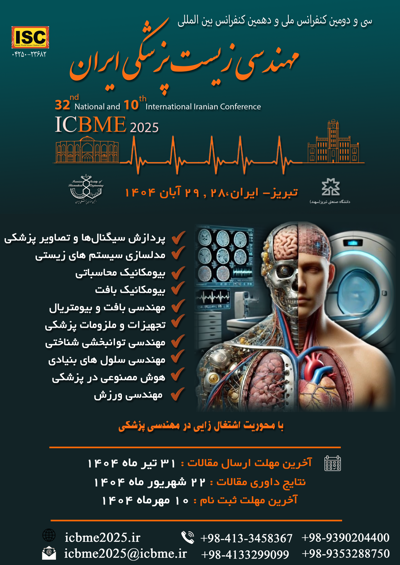
سی و دومین کنفرانس ملی و دهمین کنفرانس بین المللی مهندسی زیست پزشکی ایران
Comparative Numerical Analysis of Spiral Geometries for Passive Particle Separation in Microfluidic Devices
نویسندگان :
Yunes Chakeralhoseini
1
Mohammad Mahdi Tekiyeh
2
Mahdi Moghimi Zand
3
1- دانشگاه تهران
2- دانشگاه تهران
3- دانشگاه تهران
کلمات کلیدی :
Microfluidics،Lab-on-a-Chip،Particle Separation،Spiral Microchannel،Inertial Focusing Flow
چکیده :
Micro- and nanoparticles play a critical role in chemical, biological, and industrial processes, where consistent particle size and distribution are essential for reliable performance. Microfluidic devices, or lab-on-a-chip (LOC) systems, have been developed to facilitate particle separation and purification. Among these, passive separation devices are often preferred because they rely solely on fluid flow and channel geometry rather than external forces. Spiral microchannels are widely used in such systems, as their curved design induces secondary Dean flows that enhance particle migration and separation. This study numerically investigates the influence of spiral layout and repetition count on particle separation using the Finite Element Method (FEM). Two spiral layouts, circular and square, were analyzed with 2, 4, and 6 repetitions, while maintaining a constant channel cross-section. The simulations focused on the interaction between inertial lift and Dean drag forces to evaluate flow behaviour and particle trajectories. The findings indicate that the square spiral layout provides more precise and reliable separation of particles with different sizes compared to the circular layout.
لیست مقالات
لیست مقالات بایگانی شده
پیشبینی جهت حرکت قیمت طلا در بازار فارکس مبتنی بر نمایانگرهای ایچیموکو با استفاده از روشهای سنتی یادگیری ماشین
محمد رزاقی - محمدحسین خسروی - فاطمه یوسف زاده
تاثیر هوش مصنوعی بر عملکرد شرکت با میانجیگری چابکی مشتری و ظرفیت جذب و تعدیلگری چابکی سازمان شرکت عامر اندیش هوشمند
مریم مقرب صمدی
تاثیر رویکرد حسابداری و مالی بر قضاوت وتصمیم گیری اثر خود هویتی سبز بر تغییر قصدخرید با نقش میانجی ارزش ادراکی و تعدیل کنندگی خودهمسویی ( مورد مطالعه :مشتریان فروشگاه اینترنتی جوپزی)
حسین بوذری
Stem cell engineering in tissue repair: A Review of Therapeutic Perspectives
Farnaz Mozayani - Mohammadbagher Kargar
حسابداری و حسابرسی با فناوری بلاک چین و هوش مصنوعی: بررسی ادبیات
رعنا شهدآور - محمد فرجی بنائی - مریم لطفی - فاطمه ذوالفقاری
Corrective Insoles Enhance Center of Mass Stability During Stair Descent in Individuals with Leg Length Discrepancy
Kasra Alborzi - Alireza Hashemi Oskouei - Pouya Mansouri - Seyed Mehran Ayati Najafabadi
Effect of ph changes on thermal and mechanical properties of polyacrylamide hydrogel using molecular dynamics simulation
Narges Karimzadeh Dehkordi
Graph Attention Networks for EEG-Based Emotion Recognition: Focus on Channel‑Level Attention
Akbar Asgharzadeh-Bonab - Hamid Bigdeli - Mohammad Javad Heidari
Feature-Conditioned WGAN for Generating Alzheimer’s EEG: Enabling GAN-Based Synthesis Under Data Scarcity
Parsa Bahramsari - Alireza Taheri
راهبرد تجاری و رفتار نامتقارن هزینهها با تاکید بر نقش توانایی مدیریتی شواهدی از شرکتهای پذیرفته شده بورس اوراق بهادار تهران و مسقط
علی انصاری - مهدی بشکوه
بیشتر
19 اردیبهشت 1405
راهنمای انتخاب کنفرانس معتبر برای چاپ مقاله علمی
19 اردیبهشت 1405
چرا شرکت در کنفرانسهای علمی برای مصاحبه دکتری اهمیت دارد؟
21 اردیبهشت 1405
پذیرش سریع مقاله در کنفرانسهای علمی مهندسی و فناوری آغاز شد
21 اردیبهشت 1405
آغاز ثبتنام در همایشهای بینالمللی مدیریت و حسابداری
ثمین همایش، سامانه مدیریت کنفرانس ها و جشنواره ها - نگارش 44.7.0