لطفا منتظر بمانید ...
0% Complete
English
☰
صفحه اصلی
کنفرانسهای فعال
مدیریت منابع انسانی پایدار
حسابداری
بازاریابی و برندینگ در عصر هوش مصنوعی
هوش مصنوعی:نوآوری، کسبوکار و آموزش
ارشیو کنفرانسها
اولین کنفرانس ملی هوش مصنوعی
دومین کنفرانس ملی هوش مصنوعی
اولین کنگره ملی حسابداری، مالی و مالیاتی
32کنفرانس بین المللی زیست پزشکی
راهنمای شرکت
نحوه ثبتنام
ثبت نام مدیریت منابع انسانی پایدار
ثبت نام دومین کنگره ملی حسابداری
ثبت نام سومین کنفرانس ملی هوش مصنوعی
ثیت نام بازاریابی و برندینگ در عصر هوش مصنوعی
ثبت نام زنجیره ارزش نفت گاز و پتروشیمی
ارسال مقاله
فرمت مقالات مدیریت منابع انسانی پایدار
فرمت مقالات سیستم های هوشمند حسابداری
فرمت مقالات ملی بازاریابی و برندینگ در عصر هوش مصنوعی
فرمت مقالات سومین کنفرانس هوش مصنوعی
سوالات متداول
اخبار و رویدادها
درباره ما
تماس با ما
صفحه اصلی
/
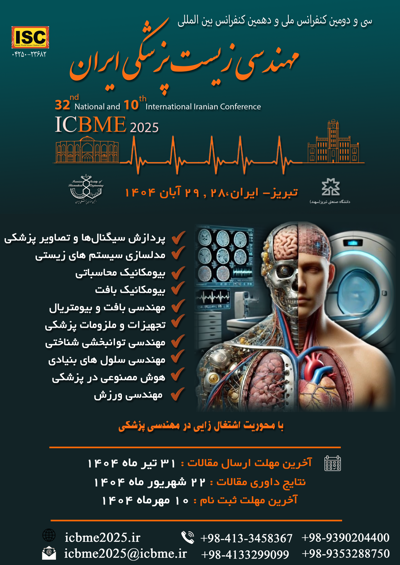
سی و دومین کنفرانس ملی و دهمین کنفرانس بین المللی مهندسی زیست پزشکی ایران
Fibroglandular Tissue Classification in Breast MRI: A Comparative Study of Automated Decision Strategies
نویسندگان :
Meysam Khalaj
1
Arvin Arian
2
Ala Torabi
3
Nasrin Ahmadinejad
4
Masoumeh Gity
5
Seyedeh Nooshin Miratashi Yazdi
6
Mohammad Pooya Afshari
7
Melika Sadeghi Tabrizi
8
Hamid Soltanian-Zadeh
9
1- University of Tehran
2- Tehran University of Medical Sciences
3- Tehran University of Medical Sciences
4- Tehran University of Medical Sciences
5- Tehran University of Medical Sciences
6- Tehran University of Medical Sciences
7- University of Tehran
8- University of Tehran
9- University of Tehran
کلمات کلیدی :
Fibroglandular Tissue Classification،Breast MRI،BI-RADS Assessment،Deep Learning،Shannon Entropy
چکیده :
Fibroglandular tissue (FGT) assessment in breast magnetic resonance imaging (MRI) is clinically important for breast cancer risk evaluation and is standardized in the Breast Imaging Reporting and Data System (BI-RADS) lexicon. While automated approaches have largely focused on segmentation, classification-based methods remain underexplored. Previous automated FGT classification studies have generally analyzed both breasts together, overlooking BI-RADS recommendations for side-specific evaluation and alternative strategies such as probability averaging or uncertainty-based rules. This study evaluates three assessment strategies: the conventional BI-RADS Maximum Rule, a novel Probability Averaging Rule to integrate bilateral information, and a novel Lower-Uncertainty Rule based on Shannon entropy to prioritize more confident predictions. These strategies were assessed using three diverse deep learning architectures, MobileNetV2, ResNeXt-26, and a hybrid ViT-ResNet, selected to analyze performance across models with different architectures and feature extraction mechanisms. The dataset comprised 654 pre-contrast 3D axial T1-weighted fat-saturated breast MRI scans, with each breast evaluated independently. Across ten independent runs, ViT-ResNet with Probability Averaging Rule achieved the highest test accuracy (0.85), F1 score (0.84), and Cohen’s kappa (0.78), while violin plot analysis showed that the Lower-Uncertainty Rule produced the lowest predictive entropy. Both proposed strategies consistently outperformed the conventional rule. The curated, expert-annotated dataset is publicly released to support reproducible research in this domain.
لیست مقالات
لیست مقالات بایگانی شده
تقویت عضلات چهار سر ران و اصلاح الگوهای حرکتی با استفاده از بیوفیدبک الکترومایوگرافی در بیماران مبتلا به مالتیپل اسکلروزیس (MS)
مهدی میری - احسان تهامی - گلاره ویسی
هوش مصنوعی انقلابی در صنعت غذا
رشا مکوندی
نقش هوش مصنوعی در بهینهسازی فرآیندهای بازاریابی دیجیتال برای کسبوکارهای صنعتی
جواد قهرمان زاده
آینده پژوهی فرصتها و چالشهای احتمالی در صنعت بیمه ایران
حسین خانلو
تخصیص منابع مبتنی بر اجماع ترکیبی برای سیستمهای توزیعشده مقیاسپذیر و تحملپذیر خطا در بستر اینترنت اشیا
سالار ذوالفقاری - امین بابازاده سنگر
EEG-based Schizophrenia Detection Using Spectral, Entropy, and Graph Connectivity Features with Machine Learning
Nazila Ahmadi Daryakenari - Seyed Kamaledin Setarehdan
نقش فناوری بلاکچین در ارتقای شفافیت مالی و پیشگیری از تقلبهای حسابداری
محمدرضا پورعلی - شادی محمدی
کاربرد هوش مصنوعی در حسابداری
پریسا عابدی - حسین بوداقی خواجه نوبر
Comparative Analysis of Time-Frequency Representations for Pediatric Respiratory Sound Classification Using Deep Learning
Ghazaleh Shiri - Hanieh Bahrami - Alireza Fallahi
OpenSim Musculoskeletal Modeling Framework for sEMG-Based Knee Torque Estimation
Mohammad-Reza Sayyed Noorani - Mariya A. Vaziry - Seyed Alireza MirTajeddini
بیشتر
19 اردیبهشت 1405
راهنمای انتخاب کنفرانس معتبر برای چاپ مقاله علمی
19 اردیبهشت 1405
چرا شرکت در کنفرانسهای علمی برای مصاحبه دکتری اهمیت دارد؟
21 اردیبهشت 1405
پذیرش سریع مقاله در کنفرانسهای علمی مهندسی و فناوری آغاز شد
21 اردیبهشت 1405
آغاز ثبتنام در همایشهای بینالمللی مدیریت و حسابداری
ثمین همایش، سامانه مدیریت کنفرانس ها و جشنواره ها - نگارش 44.7.0