لطفا منتظر بمانید ...
0% Complete
English
☰
صفحه اصلی
کنفرانسهای فعال
مدیریت منابع انسانی پایدار
حسابداری
بازاریابی و برندینگ در عصر هوش مصنوعی
هوش مصنوعی:نوآوری، کسبوکار و آموزش
ارشیو کنفرانسها
اولین کنفرانس ملی هوش مصنوعی
دومین کنفرانس ملی هوش مصنوعی
اولین کنگره ملی حسابداری، مالی و مالیاتی
32کنفرانس بین المللی زیست پزشکی
راهنمای شرکت
نحوه ثبتنام
ثبت نام مدیریت منابع انسانی پایدار
ثبت نام دومین کنگره ملی حسابداری
ثبت نام سومین کنفرانس ملی هوش مصنوعی
ثیت نام بازاریابی و برندینگ در عصر هوش مصنوعی
ثبت نام زنجیره ارزش نفت گاز و پتروشیمی
ارسال مقاله
فرمت مقالات مدیریت منابع انسانی پایدار
فرمت مقالات سیستم های هوشمند حسابداری
فرمت مقالات ملی بازاریابی و برندینگ در عصر هوش مصنوعی
فرمت مقالات سومین کنفرانس هوش مصنوعی
سوالات متداول
اخبار و رویدادها
درباره ما
تماس با ما
صفحه اصلی
/
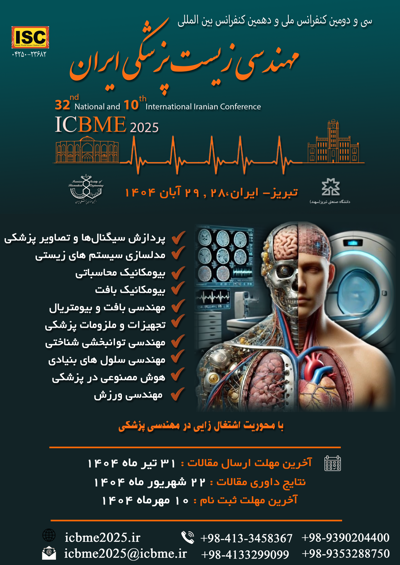
سی و دومین کنفرانس ملی و دهمین کنفرانس بین المللی مهندسی زیست پزشکی ایران
Microfluidic Flow-Focusing Systems for Alginate Microcapsule Preparation: Tuning Droplet Size and Frequency
نویسندگان :
Meisam Akbari laleh
1
Yasaman Pahlevanzadeh
2
Mina Shafiei
3
Javad Rahbar shahrouzi
4
1- دانشگاه صنعتی امیرکبیر
2- دانشگاه صنعتی شریف
3- دانشگاه صنعتی سهند
4- دانشگاه صنعتی سهند
کلمات کلیدی :
Microfluidics،Droplet generation،Flow-focusing،Alginate microdroplets،Level-Set method،Junction angle،Two-phase flow،Numerical simulation
چکیده :
Microencapsulation is an efficient method for protecting unstable compounds in chemical environments and has wide applications in medicine and tissue engineering. In this study, the formation of alginate microgels in a microfluidic flow-focusing device was numerically simulated using COMSOL Multiphysics 6.3 based on the Level-Set method. The results demonstrated that wall contact angle, flow rate of the phases, and the junction angle of the channels (30°, 60°, 90°, and 120°) significantly affect droplet size and generation frequency. Superhydrophobic channels (θ = 150°) facilitated stable W/O droplet formation, while hydrophilic walls failed to produce droplets. Increasing the dispersed phase flow rate (Qd) led to larger droplets and plug flow, whereas increasing the continuous phase flow rate (Qc) reduced droplet size due to enhanced shear stress. Overall, the simulation results indicate that the junction angle directly governs the balance between viscous shear forces and interfacial tension. Narrower angles favor shear-dominated breakup with smaller, more monodisperse droplets, whereas wider angles shift the mechanism toward pressure-driven pinch-off, producing larger droplets with lower throughput. Therefore, the channel intersection angle serves as an effective design parameter for tuning droplet size distribution and generation rate in microfluidic systems.
لیست مقالات
لیست مقالات بایگانی شده
مشارکت دادن حسابداران مدیریت در پایداری شرکت
رعنا شهد آور - بیتا یوسف پور نوینی
Deep Neural Network–Based Adaptive Global Logarithmic Sliding Mode Control for Lower-Limb Rehabilitation Exoskeletons
Masoud Shirzadeh - Ghoncheh Zand - Samim Kamyab
Gravity-Directed Growth of ZnO Nanorods: Morphological Control via Chemical Bath Deposition
Masoud Ghashami - Melisa Daryayi - Mohammad Abdolahad
Short-term gains vs. long-term Success: Reward strategy design for reinforcement learning in football
Mohammad Pashaei - Amirhossein Tayebi - Hadi Amiri - Ali Fahim
Exponential sliding mode controller to track the human upper limb during Topspin Forehand in Table Tennis
Erfan Sedaghat - Seyyed Arash Haghpanah
.Deep Learning-based Segmentation of Human Sperm Heads using YOLOv8 and SAM
Hadis Aligoo Zanjany - Maryam Pashaiasl - Ata Jodeiri
An Attention-Guided Convolutional Neural Network for Predicting Neoadjuvant Chemotherapy Response in Breast Cancer Patients
Parisa Donyaei - Javad Haddadnia
Physics-Informed Neural Networks for Cardiac Flow Estimation in 2D Simplified Human Right Ventricular Geometry
Mohammadmahdi Sekhavatpisheh - Nasser Fatouraee
تأثیر تجزیه و تحلیل ارقام صورتهای مالی بر تصمیمگیری مدیریتی در افزایش و کاهش قیمت سهام
علی نمازیان - سمیه کهنوجی
بلاکچین برای آینده مدیریت زنجیره تأمین پایدار در صنعت چهارم
زهرا کرمی
بیشتر
19 اردیبهشت 1405
راهنمای انتخاب کنفرانس معتبر برای چاپ مقاله علمی
19 اردیبهشت 1405
چرا شرکت در کنفرانسهای علمی برای مصاحبه دکتری اهمیت دارد؟
21 اردیبهشت 1405
پذیرش سریع مقاله در کنفرانسهای علمی مهندسی و فناوری آغاز شد
21 اردیبهشت 1405
آغاز ثبتنام در همایشهای بینالمللی مدیریت و حسابداری
ثمین همایش، سامانه مدیریت کنفرانس ها و جشنواره ها - نگارش 44.7.0