لطفا منتظر بمانید ...
0% Complete
English
☰
صفحه اصلی
کنفرانسهای فعال
مدیریت منابع انسانی پایدار
حسابداری
بازاریابی و برندینگ در عصر هوش مصنوعی
هوش مصنوعی:نوآوری، کسبوکار و آموزش
ارشیو کنفرانسها
اولین کنفرانس ملی هوش مصنوعی
دومین کنفرانس ملی هوش مصنوعی
اولین کنگره ملی حسابداری، مالی و مالیاتی
32کنفرانس بین المللی زیست پزشکی
راهنمای شرکت
نحوه ثبتنام
ثبت نام مدیریت منابع انسانی پایدار
ثبت نام دومین کنگره ملی حسابداری
ثبت نام سومین کنفرانس ملی هوش مصنوعی
ثیت نام بازاریابی و برندینگ در عصر هوش مصنوعی
ثبت نام زنجیره ارزش نفت گاز و پتروشیمی
ارسال مقاله
فرمت مقالات مدیریت منابع انسانی پایدار
فرمت مقالات سیستم های هوشمند حسابداری
فرمت مقالات ملی بازاریابی و برندینگ در عصر هوش مصنوعی
فرمت مقالات سومین کنفرانس هوش مصنوعی
سوالات متداول
اخبار و رویدادها
درباره ما
تماس با ما
صفحه اصلی
/
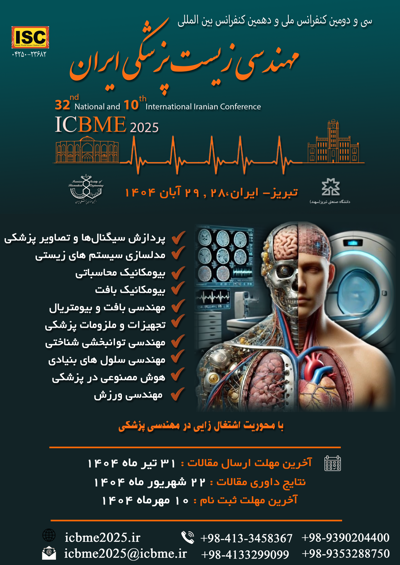
سی و دومین کنفرانس ملی و دهمین کنفرانس بین المللی مهندسی زیست پزشکی ایران
Improved Metric for Classification of Nearby Reaching Targets: A Distance-Weighted Accuracy Approach
نویسندگان :
Zahra Dayani
1
Ali Maleki
2
Ali Fallah
3
1- دانشگاه صنعتی امیرکبیر(پلی تکنیک تهران)
2- دانشگاه سمنان
3- دانشگاه صنعتی امیرکبیر(پلی تکنیک تهران)
کلمات کلیدی :
reaching target classification،upper-limb prosthesis control،spatially weighted accuracy،performance evaluation metrics،misclassification cost،motor intention decoding
چکیده :
Accurate classification of reaching targets is critical for upper-limb prosthesis control, rehabilitation robotics, and human-robot interaction. Traditional classification metrics assume uniform misclassification costs, ignoring the spatial relationships between targets. This overlooks significant performance degradation: misclassifications in safety-critical zones (e.g., near obstacles or humans) or those impairing functional outcomes (e.g., failing to grasp a cup) can be far more detrimental than spatially adjacent misclassifications—despite equivalent cost in standard metrics—leading to elevated user workload or complete task failure. To address this, we propose a spatially informed weighted accuracy metric. Misclassification costs are assigned based on the normalized Euclidean distance between the intended target and the misclassified position, penalizing distant errors more heavily than proximal ones. We demonstrate the utility of this metric first using synthetic confusion matrices achieving identical standard accuracy but exhibiting distinct spatial error patterns (far, near and random misclassification error patterns). We then apply it to a real-world reaching target prediction task, comparing two classifiers (Quadratic Kernel SVM vs. Gaussian Kernel SVM) with equal standard accuracy (63%). The proposed metric effectively discriminates classifier performance by imposing higher penalties on distant misclassifications (86.3% for Quadratic Kernel SVM vs. 85.5% Gaussian Kernel SVM), revealing significant differences masked by standard accuracy. Crucially, the metric explicitly normalizes against the worst-case misclassification cost inherent to the target layout, providing a spatially aware assessment of classification performance essential for real-world deployment.
لیست مقالات
لیست مقالات بایگانی شده
ارائه روشی جدید برای دستیابی به تعادل بار کاری پردازنده ها در محیط توزیع شده گرید محاسباتی با استفاده از الگوریتم ژنتیک
نجمه بلوردی - مریم حسینی گسمونی - فاطمه امامی پناه - مجده فخرآبادی
تبیین عوامل مؤثر بازاریابی محتوای دیجیتال و هوش مصنوعی بر روابط شرکتها با برندها
حسین بوذری
بررسی تطبیقی چالش های قراردادهای هوشمند مبتنی بر بلاکچین در نظام حقوقی ایران با کشورهای آلمان و آمریکا
رضا بیرانوند - شیما ملامحمدی
ارزیابی عملکرد در سازمانهای پست مدرن
مهدی خضوعی
چالشها و تهدیدهای امنیتی رایانش ابری در تحلیل دادههای کلان
حمداله مهرآیین
تخصیص منابع مبتنی بر اجماع ترکیبی برای سیستمهای توزیعشده مقیاسپذیر و تحملپذیر خطا در بستر اینترنت اشیا
سالار ذوالفقاری - امین بابازاده سنگر
مروری بر توسعه نرمافزار برای دستگاههای اینترنت اشیا
سجاد یوسفی - مریم پورنجف - ایدا اسدی
هوش مصنوعی و مدیریت مالی و سرمایه
محمد ملکی
Gravity-Directed Growth of ZnO Nanorods: Morphological Control via Chemical Bath Deposition
Masoud Ghashami - Melisa Daryayi - Mohammad Abdolahad
بررسی تاثیر ورشکستگی بر رابطه بین استراتژیهای تجاری و معیارهای عملکرد شرکت (ESG)
جواد پورغفار - ایوب یغمائی علیشاه
بیشتر
19 اردیبهشت 1405
راهنمای انتخاب کنفرانس معتبر برای چاپ مقاله علمی
19 اردیبهشت 1405
چرا شرکت در کنفرانسهای علمی برای مصاحبه دکتری اهمیت دارد؟
21 اردیبهشت 1405
پذیرش سریع مقاله در کنفرانسهای علمی مهندسی و فناوری آغاز شد
21 اردیبهشت 1405
آغاز ثبتنام در همایشهای بینالمللی مدیریت و حسابداری
ثمین همایش، سامانه مدیریت کنفرانس ها و جشنواره ها - نگارش 44.7.0