لطفا منتظر بمانید ...
0% Complete
English
☰
صفحه اصلی
کنفرانسهای فعال
مدیریت منابع انسانی پایدار
حسابداری
بازاریابی و برندینگ در عصر هوش مصنوعی
هوش مصنوعی:نوآوری، کسبوکار و آموزش
ارشیو کنفرانسها
اولین کنفرانس ملی هوش مصنوعی
دومین کنفرانس ملی هوش مصنوعی
اولین کنگره ملی حسابداری، مالی و مالیاتی
32کنفرانس بین المللی زیست پزشکی
راهنمای شرکت
نحوه ثبتنام
ثبت نام مدیریت منابع انسانی پایدار
ثبت نام دومین کنگره ملی حسابداری
ثبت نام سومین کنفرانس ملی هوش مصنوعی
ثیت نام بازاریابی و برندینگ در عصر هوش مصنوعی
ثبت نام زنجیره ارزش نفت گاز و پتروشیمی
ارسال مقاله
فرمت مقالات مدیریت منابع انسانی پایدار
فرمت مقالات سیستم های هوشمند حسابداری
فرمت مقالات ملی بازاریابی و برندینگ در عصر هوش مصنوعی
فرمت مقالات سومین کنفرانس هوش مصنوعی
سوالات متداول
اخبار و رویدادها
درباره ما
تماس با ما
صفحه اصلی
/
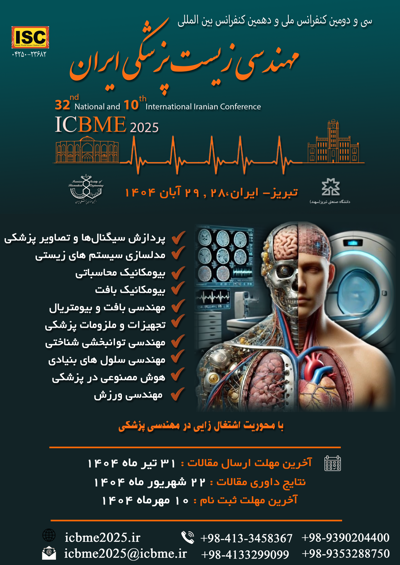
سی و دومین کنفرانس ملی و دهمین کنفرانس بین المللی مهندسی زیست پزشکی ایران
EEG-Based Classification of Schizophrenia and Healthy Controls Subjects Using Statistical and Nonlinear Features with Emphasis on Fuzzy Entropy
نویسندگان :
Mahdiyeh Tofighi Milani
1
Sina Shamekhi
2
Asghar Zarei
3
1- دانشگاه صنعتی تبریز(سهند)
2- دانشگاه صنعتی تبریز(سهند)
3- دانشگاه صنعتی تبریز(سهند)
کلمات کلیدی :
Schizophrenia،Electroencephalogram،Machine Learning،Fuzzy Entropy
چکیده :
Schizophrenia is a severe mental disorder that frequently causes the patient to have numerous problems with normal daily activities, and still, doctors struggle to accurately diagnose it in the early stages. Brain imaging and clinical tests, even if they are sometimes capable of achieving the goal, are often a lengthy procedure, expensive, and can also be somewhat uncomfortable for patients. New scientific work seeks to come up with a less intrusive and cheaper method, which will include the use of the EEG signal and the ML algorithm in identifying abnormalities of the schizophrenic patients as compared with the healthy ones. At first, the Fast Fourier Transform (FFT) was used to decompose the EEG signal into multiple sub-bands of frequency, and it was decided to extract a set of features from each sub-band, where the features included the statistical and nonlinear features - kurtosis, skewness, Shannon entropy, fuzzy entropy, mobility, and complexity. Subsequently, the ReliefF algorithm was utilized for the selection of features, and the significant features thus extracted were used as input for a number of classifiers, including the k-nearest neighbors (KNN), linear support vector machine (SVM), and the random forest (RF), to name but a few. The functional capabilities of the designed system were verified on a genuine EEG dataset that contains recorded signals from teenage schizophrenia patients as well as from healthy subjects. Random forest was identified as the most effective one among the various implemented classifiers, as it achieved the highest performance with an average accuracy of 97.69%. Also, fuzzy entropy was identified to be a constantly discriminative feature, implying it could serve as a sound biomarker for the differentiation of schizophrenia from healthy subjects by utilizing EEG signals.
لیست مقالات
لیست مقالات بایگانی شده
رابطه میان ماکیاولیسم و بی طرفی حسابرس
میر امید یوسفی شارمی - بهمن بنی مهد - مهدی مرادزاده فرد - بهرام همتی
بررسی تاثیر اجتناب مالیاتی بر اهرم مالی و جریان نقدی
صفیه سلیمان نژاد - امید پایدار خیابانی - احمد شاهی - محمد هاشم نژاد سراجه لو
تاثیر اختلاف قیمت خرید و فروش سهام و اهرم مالی بر مدیریت سود واقعی با تاکید بر نقش تعدیلی حاکمیت شرکتی
هادی اله قلیان - مهدی زینالی
Transforming Sentiment Analysis with a New LLM Architecture
Hossein Gholamalinejad - Tahoora Ramezanimoghaddam
Recovery of Hand Motor Function in Children with Hemiparetic Cerebral Palsy using an Interactive Computer Game Combined with Mechanoreceptor Stimulation: A Pilot Study
Mobina Ramezani - Shahed Salehzehi - Parisa Hosseini - Zahra Alizadeh Sarborj - Ghazal Mohammadzadeh - Hamid Reza Kobravi - Narges Hashemi - Mehran Beiraghi Toosi - Javad Akhondian
An RZ-OOK Modulation Technique for Joint Data Rate and Output Power Tuning in Biomedical Applications
Tayebeh Azadmousavi - Esmaeil Najafiaghdam
Added value of synthetic T1/T2-weighted MR images in the segmentation and staging of meningioma
Masoud Noroozi - Sayna Jamaati - Peyman Sharifian - Mahsa Karbasi - Esmaeil Gharepapagh - Alireza Karimian - Hossein Arabi - Sahar Rezaei
تاثیر هوش مصنوعی بر عملکرد سازمانی: نقش واسطه ای بهره وری کارکنان(مطالعه موردی: اداره مالیاتی شهر تبریز)
نیما صدری نوبرزاده - پریسا صدری نوبرزاده
Deep Learning Approaches for Alzheimer’s Disease Diagnosis: A Comprehensive Review
Mahdi Jafari Asl - Saba Haji Molla Rabie
تاثیر کیفیت گزارشگری مالی بر مالی سازی شرکت با تاکید بر هزینه های نمایندگی
حیدر محمدزاده سالطه - محمد احسانی - سید علی موسوی
بیشتر
19 اردیبهشت 1405
راهنمای انتخاب کنفرانس معتبر برای چاپ مقاله علمی
19 اردیبهشت 1405
چرا شرکت در کنفرانسهای علمی برای مصاحبه دکتری اهمیت دارد؟
21 اردیبهشت 1405
پذیرش سریع مقاله در کنفرانسهای علمی مهندسی و فناوری آغاز شد
21 اردیبهشت 1405
آغاز ثبتنام در همایشهای بینالمللی مدیریت و حسابداری
ثمین همایش، سامانه مدیریت کنفرانس ها و جشنواره ها - نگارش 44.7.0