لطفا منتظر بمانید ...
0% Complete
English
☰
صفحه اصلی
کنفرانسهای فعال
مدیریت منابع انسانی پایدار
حسابداری
بازاریابی و برندینگ در عصر هوش مصنوعی
هوش مصنوعی:نوآوری، کسبوکار و آموزش
ارشیو کنفرانسها
اولین کنفرانس ملی هوش مصنوعی
دومین کنفرانس ملی هوش مصنوعی
اولین کنگره ملی حسابداری، مالی و مالیاتی
32کنفرانس بین المللی زیست پزشکی
راهنمای شرکت
نحوه ثبتنام
ثبت نام مدیریت منابع انسانی پایدار
ثبت نام دومین کنگره ملی حسابداری
ثبت نام سومین کنفرانس ملی هوش مصنوعی
ثیت نام بازاریابی و برندینگ در عصر هوش مصنوعی
ثبت نام زنجیره ارزش نفت گاز و پتروشیمی
ارسال مقاله
فرمت مقالات مدیریت منابع انسانی پایدار
فرمت مقالات سیستم های هوشمند حسابداری
فرمت مقالات ملی بازاریابی و برندینگ در عصر هوش مصنوعی
فرمت مقالات سومین کنفرانس هوش مصنوعی
سوالات متداول
اخبار و رویدادها
درباره ما
تماس با ما
صفحه اصلی
/
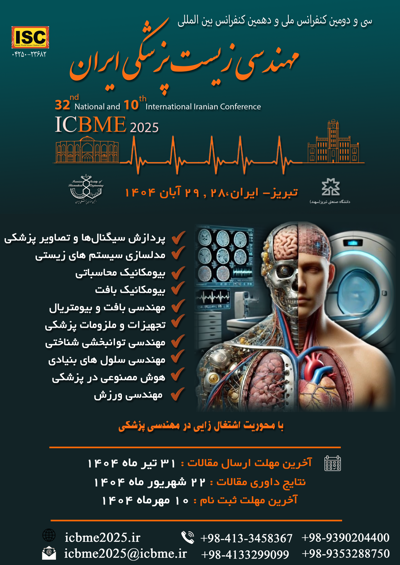
سی و دومین کنفرانس ملی و دهمین کنفرانس بین المللی مهندسی زیست پزشکی ایران
Semi-Automatic Multi-Stage Artifact Removal in EEG During Subthreshold GVS: A Machine Learning Approach for Neuromodulation Studies
نویسندگان :
Mahdi Babaei
1
Sepideh Hajipour Sardouie
2
Martin Keung
3
Varsha Sreenivasan
4
Hanaa Diab
5
Maryam S. Mirian
6
Martin J. McKeown
7
1- دانشکده برقوکامپیوتر، دانشگاه تهران
2- University of British Columbia
3- University of British Columbia
4- University of British Columbia
5- University of British Columbia
6- University of British Columbia
7- University of British Columbia
کلمات کلیدی :
Parkinson’s disease،Galvanic vestibular stimulation،Neuromodulation،Artifact removal،EEG،biomarkers،Machine learning
چکیده :
Parkinson’s disease (PD) is characterized by widespread disruptions in neural oscillations and network dynamics, which can be captured through resting-state EEG biomarkers. Galvanic vestibular stimulation (GVS) has emerged as a promising noninvasive neuromodulation technique to modulate these neural patterns. However, EEG recordings during GVS are severely contaminated by high-amplitude stimulation artifacts, especially when exploring a wide range of stimulation protocols. In this study, we designed a data acquisition protocol involving 304 distinct subthreshold GVS waveforms, each with a unique temporal profile, to investigate their effects on brain activity. These stimuli induced strong artifacts in the EEG signal, particularly during the stimulation interval. To recover clean EEG signals, we developed a multi-stage preprocessing pipeline combining regression-based artifact suppression, canonical correlation analysis (CCA), and independent component analysis (ICA), supported by machine learning classifiers for automatic detection and removal of GVS, EOG, and EMG artifacts. We evaluated the effectiveness of this pipeline through classification of EEG signals from PD patients and healthy controls across three temporal segments: pre-stimulation (Pre-stim), stimulation (Stim), and post-stimulation (Post-stim). Despite the intense artifacts in the Stim interval, classification accuracy reached 82.46%, closely matching the performance in Pre-stim (85.06%) and Post-stim (91.67%) intervals. This confirms that the artifact removal process successfully preserved disease-relevant neural information even during active stimulation. Beyond classification, we conducted additional evaluations including temporal consistency analysis of biomarkers, correlation of model coefficients across intervals, and visual inspection of signal quality. These assessments demonstrated that the cleaned EEG signals retained physiologically meaningful patterns and stable biomarker profiles across time. Our findings show that EEG signals recorded during GVS can be reliably cleaned and analyzed, enabling rapid screening of stimulation protocols and paving the way for personalized neuromodulation strategies in Parkinson’s disease.
لیست مقالات
لیست مقالات بایگانی شده
کاربرد هوش مصنوعی در پیشبینی دمای هوای ماهیانه
مریم حدادی
نقش بازاریابی رابطه مند و مدیریت ارتباط با مشتری درتقویت وفاداری مشتری باتاثیر هوش مصنوعی
فرزاد توکلی - معصومه خوانچه سپهر
Finite Element Analysis of Spine ProDisc-L Using Titanium, CFR-PEEK and CoCr Endplates with UHMWPE-GUR1020 75kGy RM Core
Amirali Kashani - Siavash Kazemirad
مدلسازی پیشبینی سکته مغزی با الگوریتمهای تقویتی و شبکههای عصبی در دادههای نامتعادل
ملیحه نیک سیرت - سیده فاطمه جوادی
A Comparative Analysis of Simulated and Experimental Acoustic and Thermal Behavior of HIFU
Maryam Fazeli - Remi Souchon - Cyril Lafon - Mehran Jahed
بررسی تاثیر خدمات حسابرسی برکیفیت گزارشگری مالی با تاکید بر نقش حسابرسان دارای تخصص حسابداری
امیر اقاعلی زاده دارانداشی - فاطمه صمدی
Diagnosis of Multiple Sclerosis Using Recurrence Plot of EEG
Neda Baghestani - Amin Janghorbani
Late Fusion-Based Deep Learning for Breast Cancer Classification in Mammography
Mehdi Baharloo - Ata Jodeiri
ساخت داربست پلییورتان گرمانرم-هیدروکسی آپاتیت-اکسید گرافن احیا شده و بررسی رفتار زیستتخریبپذیری و زیستسازگاری آن
سید امیررضا زارعیان - سید مجتبی زبرجد
رابطه هوش مصنوعی مدیریت و سازمانها
حسین بوذری
بیشتر
19 اردیبهشت 1405
راهنمای انتخاب کنفرانس معتبر برای چاپ مقاله علمی
19 اردیبهشت 1405
چرا شرکت در کنفرانسهای علمی برای مصاحبه دکتری اهمیت دارد؟
21 اردیبهشت 1405
پذیرش سریع مقاله در کنفرانسهای علمی مهندسی و فناوری آغاز شد
21 اردیبهشت 1405
آغاز ثبتنام در همایشهای بینالمللی مدیریت و حسابداری
ثمین همایش، سامانه مدیریت کنفرانس ها و جشنواره ها - نگارش 44.7.0