لطفا منتظر بمانید ...
0% Complete
English
☰
صفحه اصلی
کنفرانسهای فعال
مدیریت منابع انسانی پایدار
حسابداری
بازاریابی و برندینگ در عصر هوش مصنوعی
هوش مصنوعی:نوآوری، کسبوکار و آموزش
ارشیو کنفرانسها
اولین کنفرانس ملی هوش مصنوعی
دومین کنفرانس ملی هوش مصنوعی
اولین کنگره ملی حسابداری، مالی و مالیاتی
32کنفرانس بین المللی زیست پزشکی
راهنمای شرکت
نحوه ثبتنام
ثبت نام مدیریت منابع انسانی پایدار
ثبت نام دومین کنگره ملی حسابداری
ثبت نام سومین کنفرانس ملی هوش مصنوعی
ثیت نام بازاریابی و برندینگ در عصر هوش مصنوعی
ثبت نام زنجیره ارزش نفت گاز و پتروشیمی
ارسال مقاله
فرمت مقالات مدیریت منابع انسانی پایدار
فرمت مقالات سیستم های هوشمند حسابداری
فرمت مقالات ملی بازاریابی و برندینگ در عصر هوش مصنوعی
فرمت مقالات سومین کنفرانس هوش مصنوعی
سوالات متداول
اخبار و رویدادها
درباره ما
تماس با ما
صفحه اصلی
/
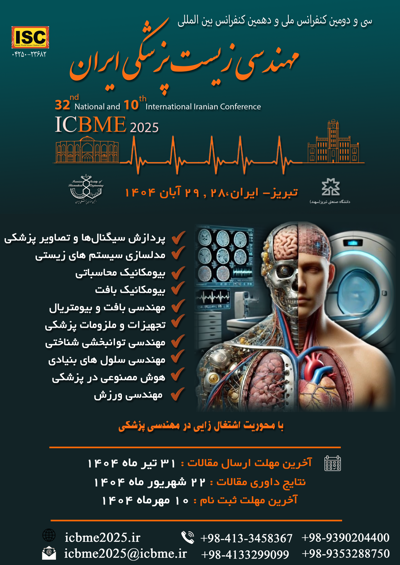
سی و دومین کنفرانس ملی و دهمین کنفرانس بین المللی مهندسی زیست پزشکی ایران
Mitigating MRI Domain Shift in Sex Classification: A Deep Learning Approach with ComBat Harmonization
نویسندگان :
Peyman Sharifian
1
Mohammad Saber Azimi
2
Masoud Noroozi
3
Alireza Karimian
4
Hossein Arabi
5
1- دانشگاه اصفهان
2- دانشگاه شهید بهشتی
3- دانشگاه اصفهان
4- دانشگاه اصفهان
5- دانشگاه ژنو
کلمات کلیدی :
Deep Learning،Sex Classification،Combat Harmonization،Domain Adaptation،Magnetic Resonance Imaging
چکیده :
Deep learning models for medical image analysis often suffer from performance degradation when applied to data from different scanners or protocols, a phenomenon known as domain shift. This study investigates this challenge in the context of sex classification from 3D T1-weighted brain magnetic resonance imaging (MRI) scans using the IXI and OASIS3 datasets. While models achieved high within-domain accuracy (around 0.95) when trained and tested on a single dataset (IXI or OASIS3), we demonstrate a significant performance drop to chance level (about 0.50) when models trained on one dataset are tested on the other, highlighting the presence of a strong domain shift. To address this, we employed the ComBat harmonization technique to align the feature distributions of the two datasets. We evaluated three state-of-the-art 3D deep learning architectures (3D ResNet18, 3D DenseNet, and 3D EfficientNet) across multiple training strategies. Our results show that ComBat harmonization effectively reduces the domain shift, leading to a substantial improvement in cross-domain classification performance. For instance, the cross-domain balanced accuracy of our best model (ResNet18 3D with Attention) improved from approximately 0.50 (chance level) to 0.61 after harmonization. t-SNE visualization of extracted features provides clear qualitative evidence of the reduced domain discrepancy post-harmonization. Cross-domain balanced accuracy improved from ~0.50 to 0.61 after ComBat, a modest yet meaningful gain that moves the model from chance-level failure toward more reliable generalization while remaining below clinical utility. This work underscores the critical importance of domain adaptation techniques for building robust and generalizable neuroimaging AI models.
لیست مقالات
لیست مقالات بایگانی شده
Design and fabrication of a cost-effective dry electrode for electroencephalography (EEG) signal acquisition
Sobhan Sheykhivand - Nastaran Khaleghi - Lida Zareh Lahijan
نقش کلیدی نانولوله های کربنی در بهبود همزمان خواص مکانیکی، ضدباکتریایی و زیست سازگاری پوشش های HA-Ta2O5 بر روی آلیاژهای حافظه دار NiTi
نازیلا هوراندقدیم - جعفر خلیل علافی
تاثیر ویژگیهای حسابرس مستقل بر ارزش افزوده اقتصادی با تاکید بر اثربخشی هیئت مدیره در صنعت فولاد
فرناز علی بالازاده یامچلو - رامین علی بالازاده یامچلو
Towards Accurate Multimodal Defformable Image Registration via Image Translation and Weak Supervision
Maryam Nasr - Mohammadreza Yazdchi - Mohsen Safdari
کاربرد هوش مصنوعی در حقوق تجارت
دانیال دولت شا - لیلا جوانمرد
نقش پیاده سازی هوش مصنوعی در تحول ارتباطات بازاریابی وتوسعه ی شایستگی اخلاقی برندهای فعال
شبنم سخی نیا
مطالعه ای بر نقش نوآوری و روش های فناوری اطلاعات (بلاک چین، اینترنت اشیا، حسابداری ابری، کلان داده) در کیفیت سیستم های اطلاعات حسابداری
فاطمه سپهوند - محمود همت فر
درآمدزایی از آزادی: تحلیل مدل کسبوکار نرمافزارهای آزاد
محمد امیری نسب - آرمان محبعلی - امید دادرس
نقش هوش مصنوعی در مزیت رقابتی با نقش میانجی استراتژی های بازاریابی
امین سلطانی
بررسی سفته و سفته الکترونیکی از دیدگاه حقوقی تجارت الکترونیک
دانیال کریم زاده - صالح ترابی گودرزی
بیشتر
19 اردیبهشت 1405
راهنمای انتخاب کنفرانس معتبر برای چاپ مقاله علمی
19 اردیبهشت 1405
چرا شرکت در کنفرانسهای علمی برای مصاحبه دکتری اهمیت دارد؟
21 اردیبهشت 1405
پذیرش سریع مقاله در کنفرانسهای علمی مهندسی و فناوری آغاز شد
21 اردیبهشت 1405
آغاز ثبتنام در همایشهای بینالمللی مدیریت و حسابداری
ثمین همایش، سامانه مدیریت کنفرانس ها و جشنواره ها - نگارش 44.7.0