لطفا منتظر بمانید ...
0% Complete
English
☰
صفحه اصلی
کنفرانسهای فعال
مدیریت منابع انسانی پایدار
حسابداری
بازاریابی و برندینگ در عصر هوش مصنوعی
هوش مصنوعی:نوآوری، کسبوکار و آموزش
ارشیو کنفرانسها
اولین کنفرانس ملی هوش مصنوعی
دومین کنفرانس ملی هوش مصنوعی
اولین کنگره ملی حسابداری، مالی و مالیاتی
32کنفرانس بین المللی زیست پزشکی
راهنمای شرکت
نحوه ثبتنام
ثبت نام مدیریت منابع انسانی پایدار
ثبت نام دومین کنگره ملی حسابداری
ثبت نام سومین کنفرانس ملی هوش مصنوعی
ثیت نام بازاریابی و برندینگ در عصر هوش مصنوعی
ثبت نام زنجیره ارزش نفت گاز و پتروشیمی
ارسال مقاله
فرمت مقالات مدیریت منابع انسانی پایدار
فرمت مقالات سیستم های هوشمند حسابداری
فرمت مقالات ملی بازاریابی و برندینگ در عصر هوش مصنوعی
فرمت مقالات سومین کنفرانس هوش مصنوعی
سوالات متداول
اخبار و رویدادها
درباره ما
تماس با ما
صفحه اصلی
/
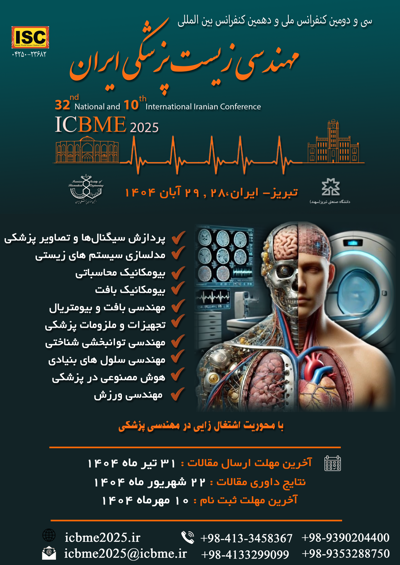
سی و دومین کنفرانس ملی و دهمین کنفرانس بین المللی مهندسی زیست پزشکی ایران
Design and Biomechanical Comparison of a Patient-Specific Anatomical Plate Versus Conventional Plate for Distal Humerus Fractures: A Finite Element Analysis
نویسندگان :
Fahime Rezazade
1
Azadeh Ghouchani
2
Maryam Amoochi
3
1- گروه مهندسی پزشکی، دانشکده مهندسی، دانشگاه اصفهان
2- گروه مهندسی پزشکی، دانشکده مهندسی، دانشگاه اصفهان
3- دانشکده مهندسی پزشکی، دانشگاه صنعتی امیرکبیر (پلیتکنیک تهران)، تهران، ایران
کلمات کلیدی :
Biomechanical characteristics،conventional plate،Fracture stability،Finite element method (FEM)،Distal humerus fracture،Patient-specific anatomic plate
چکیده :
Distal humerus fractures are clinically challenging due to anatomical complexity and complications. In this study, a new anatomic plate was designed and compared with a conventional plate for B1-type distal humerus fractures using finite element analysis. A CT-derived 3D humerus model of a 37-year-old female was developed with heterogeneous bone material properties. An anatomically contoured plate was digitally designed to match bone contours and compared with a conventional locking plate under tensile and compressive loadings (100 N). Stress, strain, and displacement analyses revealed similar peak stresses in both designs, though the conventional plate had higher stress near the fracture site. In cancellous bone, the anatomical plate model demonstrated double the stress magnitude compared to the conventional plate, suggesting more effective load transfer. The anatomical plate exhibited reduced strain, whereas cancellous bone showed higher strain within the 100–2000 microstrain range optimal for secondary bone healing. Significantly, despite higher overall hardware displacement, the anatomical plate caused less fracture interface displacement than the conventional plate. This counterintuitive result supports new fracture biomechanics concepts, showing semi-rigid fixation promotes better healing conditions. The anatomical plate’s ability to maintain fracture reduction with controlled micromotion may improve outcomes, supporting anatomically contoured designs for complex periarticular fractures.
لیست مقالات
لیست مقالات بایگانی شده
HEALTH: Hyperbolic Embedding and Acoustic-based Learning for Topological Hierarchies in Parkinson’s Disease
Saghar Shafaati - S. Hossein Erfani
ساخت داربست پلییورتان گرمانرم-هیدروکسی آپاتیت-اکسید گرافن احیا شده و بررسی رفتار زیستتخریبپذیری و زیستسازگاری آن
سید امیررضا زارعیان - سید مجتبی زبرجد
تاثیر رویکرد هوش مصنوعی بر صنعت گردشگری جوامع مختلف ایرانی
حسین بوذری
Investigation of microbubble motion in a microvessel with various obstructions filled with viscous fluid: A finite element modeling study
Mahdi Mirzaei - Afsaneh Mojra
تحلیل نقش رایانش ابری در چابکی زنجیره تأمین
دکتر غلامرضا جمالی - توحید بهزادی فرد - حسن ایزدی فر
بررسی تاثیر تکنولوژی هوش مصنوعی بر مشاغل و کسب و کارها
علی اکبر شهری مجارشین - علی میرطاهری
طراحی آتل شخصی سازی شده با روش نیمه خودکار پردازش تصاویر DICOM
محمدمهدی صفاری - محمدرضا سجادی
کاربردهای هوش مصنوعی در مدیریت موجودی و زنجیره تأمین
منا پاسدار - مبینا پاسدار
همآوایی در شبکهای جهانکوچک و متشکل از نورونهای ممریستوری
محمدمهدی شیرزاد - مهتاب مهراب بیک - سجاد جعفری
Implementation of Anisotropic Hyperelastic Materials in NL-SBFEM Framework: The HGO Model
Seyed Sadjad Abedi-Shahri - Farzan Ghalichi - Iman Zoljanahi Oscui
بیشتر
19 اردیبهشت 1405
راهنمای انتخاب کنفرانس معتبر برای چاپ مقاله علمی
19 اردیبهشت 1405
چرا شرکت در کنفرانسهای علمی برای مصاحبه دکتری اهمیت دارد؟
21 اردیبهشت 1405
پذیرش سریع مقاله در کنفرانسهای علمی مهندسی و فناوری آغاز شد
21 اردیبهشت 1405
آغاز ثبتنام در همایشهای بینالمللی مدیریت و حسابداری
ثمین همایش، سامانه مدیریت کنفرانس ها و جشنواره ها - نگارش 44.7.0