لطفا منتظر بمانید ...
0% Complete
English
☰
صفحه اصلی
کنفرانسهای فعال
مدیریت منابع انسانی پایدار
حسابداری
بازاریابی و برندینگ در عصر هوش مصنوعی
هوش مصنوعی:نوآوری، کسبوکار و آموزش
ارشیو کنفرانسها
اولین کنفرانس ملی هوش مصنوعی
دومین کنفرانس ملی هوش مصنوعی
اولین کنگره ملی حسابداری، مالی و مالیاتی
32کنفرانس بین المللی زیست پزشکی
راهنمای شرکت
نحوه ثبتنام
ثبت نام مدیریت منابع انسانی پایدار
ثبت نام دومین کنگره ملی حسابداری
ثبت نام سومین کنفرانس ملی هوش مصنوعی
ثیت نام بازاریابی و برندینگ در عصر هوش مصنوعی
ثبت نام زنجیره ارزش نفت گاز و پتروشیمی
ارسال مقاله
فرمت مقالات مدیریت منابع انسانی پایدار
فرمت مقالات سیستم های هوشمند حسابداری
فرمت مقالات ملی بازاریابی و برندینگ در عصر هوش مصنوعی
فرمت مقالات سومین کنفرانس هوش مصنوعی
سوالات متداول
اخبار و رویدادها
درباره ما
تماس با ما
صفحه اصلی
/
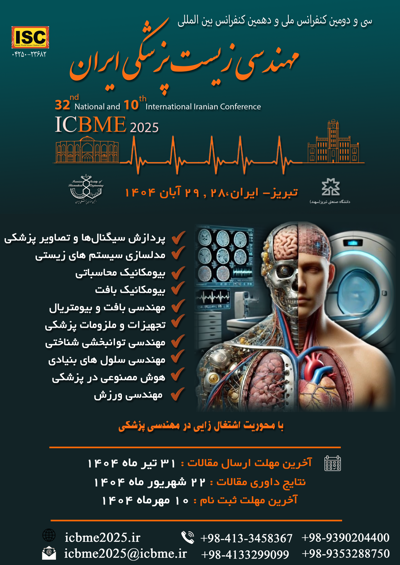
سی و دومین کنفرانس ملی و دهمین کنفرانس بین المللی مهندسی زیست پزشکی ایران
ECG-Based Detection of Acute Myocardial Infarction Using a Wrist-Worn Device: a Machine Learning Approach
نویسندگان :
Tania Hossein Khani
1
Amir hossein Tajarrod
2
Asghar Zarei
3
Mousa Shamsi
4
1- دانشکده مهندسی پزشکی، دانشگاه صنعتی سهند، تبریز، ایران
2- دانشکده مهندسی پزشکی، دانشگاه صنعتی سهند، تبریز، ایران
3- دانشکده مهندسی پزشکی، دانشگاه صنعتی سهند، تبریز، ایران
4- دانشکده مهندسی پزشکی، دانشگاه صنعتی سهند، تبریز، ایران
کلمات کلیدی :
Machine learning،Acute myocardial infarction،ECG،Wrist-worn wearable ECG،Hjorth parameters
چکیده :
Identifying acute myocardial infarction (AMI) at an early stage, particularly outside the hospital, remains one of the most pressing challenges in modern healthcare. While many wearable devices can record electrocardiogram (ECG) signals, most lack the essential precordial leads that are critical for accurate AMI detection. In this study, we evaluate the diagnostic capability of a wrist-worn, two-lead wearable ECG (wECG) device and compare its performance with the clinical standard, the conventional 12-lead ECG. Our analysis is based on a dataset where wECG and standard 12-lead ECG signals were recorded simultaneously from three participant groups: healthy individuals (CTRL), patients diagnosed with AMI, and patients with other cardiovascular diseases (CVD). This paper proposes a framework for diagnosing AMI patients as distinct from healthy individuals. Within this framework, we extracted both statistical features and Hjorth parameters. Then employed four different machine learning classifiers to assess classification performance across various scenarios. Using mutual information and f-test scores, we selected the best lead based on inter-class separation. The standard 12-lead ECG models achieved nearly flawless results, reaching 100% average accuracy. The wECG device also demonstrated impressive capabilities, accurately distinguishing between healthy participants and AMI patients with more than 98% average accuracy. Notably, the V5-LA configuration, when processed with the KNN classifier, achieved perfect average accuracy, highlighting the strong diagnostic power of this single lead. Overall, our results indicate that with careful design, a compact wECG device has the potential to serve as a reliable and highly effective tool for AMI detection in pre-hospital environments.
لیست مقالات
لیست مقالات بایگانی شده
Finite Element Analysis of Polyoxymethylene Hemostatic Clips: Stress Distribution and Hinge Geometry Optimization
Parastoo Kamali - Hadi Taghizadeh
Preparation of pH sensitive Carboxymethyl cellulose / Polyvinylpyrrolidone based hydrogels for drug delivery applications
Masoumeh Olad Mazraeh - Hanieh Shokrkar - Nilufar Nasirpur
Comparative Analysis of Time-Frequency Representations for Pediatric Respiratory Sound Classification Using Deep Learning
Ghazaleh Shiri - Hanieh Bahrami - Alireza Fallahi
تاثیر ارتباطات سیاسی و فرصت های سرمایه گذاری بر اجتناب مالیاتی
بیتا دلنواز - امیرحسین قوچی - مهنا پیرایه جو - الهه صفری
مطالعه ای بر نقش نوآوری و روش های فناوری اطلاعات (بلاک چین، اینترنت اشیا، حسابداری ابری، کلان داده) در کیفیت سیستم های اطلاعات حسابداری
فاطمه سپهوند - محمود همت فر
Silver Nanodisc Metasurface As Geometrical Tunable Absorber for Tailored Thermal Emission
Leila Ghasemzadeh - Sajjad Mortazavi - Karim Abbasian
بررسی تاثیر مهندسی مالی و مدیریت ریسک بر مدیریت پروژه های ساخت عمرانی
محمد محسنی - جعفر نیکومنش - علی محمدی
ارائه روشی جدید برای دستیابی به تعادل بار کاری پردازنده ها در محیط توزیع شده گرید محاسباتی با استفاده از الگوریتم ژنتیک
نجمه بلوردی - مریم حسینی گسمونی - فاطمه امامی پناه - مجده فخرآبادی
کاربرد بلاکچین در اینترنت اشیا :فرصت ها و چالش ها
سجاد یوسفی - مریم پورنجف - فاطمه جستجو - مهلا شریفی
بررسی رابطه مدیریت سرمایه در گردش با عملکرد مالی در بورس اوراق بهادار تهران
علی مبارکی
بیشتر
19 اردیبهشت 1405
راهنمای انتخاب کنفرانس معتبر برای چاپ مقاله علمی
19 اردیبهشت 1405
چرا شرکت در کنفرانسهای علمی برای مصاحبه دکتری اهمیت دارد؟
21 اردیبهشت 1405
پذیرش سریع مقاله در کنفرانسهای علمی مهندسی و فناوری آغاز شد
21 اردیبهشت 1405
آغاز ثبتنام در همایشهای بینالمللی مدیریت و حسابداری
ثمین همایش، سامانه مدیریت کنفرانس ها و جشنواره ها - نگارش 44.7.0